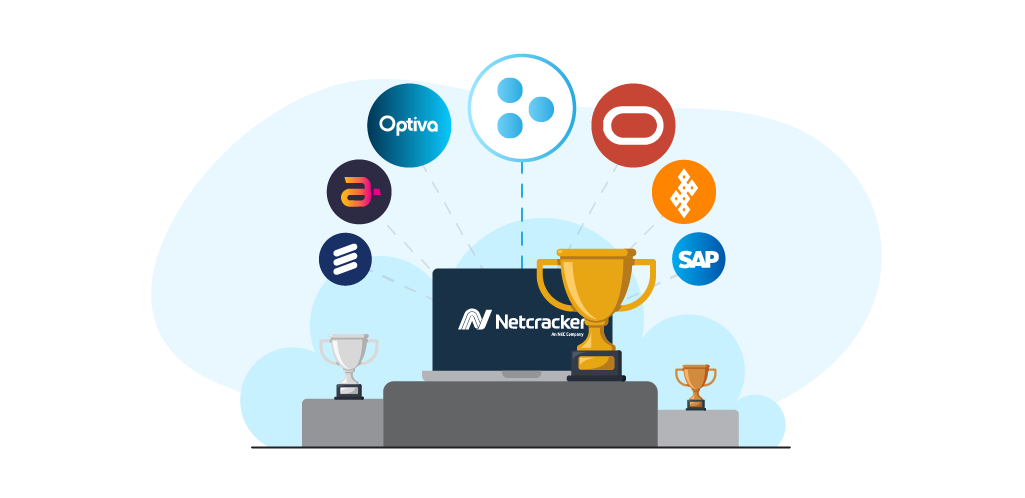
Looking for Netcracker alternatives? Our guide covers 7 leading billing platforms with pricing, pros/cons, and who they’re best for.
Table of contents
Netcracker has built a solid reputation in the telecom industry over the years. The platform handles everything from billing to customer management for operators worldwide.
But when it comes to its BSS and revenue management systems, many teams are starting to hit a wall.
Long setup times, heavy customization, and sky-high costs are making Netcracker feel more like a burden than a solution. Even small changes can take months. And if you’re trying to launch new products fast or keep costs in check, that’s a problem you can’t ignore.
If that sounds familiar, this guide is for you. We’ll walk through 7 Netcracker alternatives that are easier to use, quicker to implement, and built for the way telecom operates today.
Why Look for Alternatives to Netcracker?
Netcracker Technology is a comprehensive BSS/OSS platform that helps telecom operators manage everything from billing and customer relationships to network operations and service delivery.

They combine business support systems (BSS) for customer-facing operations with operational support systems (OSS) for network management, all built on a cloud-native architecture with AI-driven analytics.
However, many operators find that Netcracker’s complexity outweighs its features. Here’s why teams are looking elsewhere:
- Requires telecom-specific expertise: New team members often spend months just getting comfortable with basic operations. If you don’t have people with deep telecom billing experience, expect a long ramp-up period that can slow down your operations.
- API limitations with third-party tools: While Netcracker has APIs, you often need custom middleware connecting to modern SaaS platforms. This is especially frustrating when you want to use best-in-class tools for customer service, analytics, or marketing automation alongside your billing system. (Read Full Gartner Review)
- Multi-month implementation timelines: Getting Netcracker deployed takes time. The system needs extensive configuration for your specific rating schemes, product catalog, and business rules. Even with experienced consultants, expect 6-12 months before you’re fully operational.
- Vendor lock-in through specialized skills: Once you’re on Netcracker, making changes becomes expensive because you need certified developers who understand the platform’s architecture. You’re often looking at contractor rates and project timelines instead of quick internal fixes.
- Rigid architecture for modern needs: Netcracker was built for traditional telecom operations, which can feel restrictive if you’re trying to launch digital services or work with cloud-native tools. (Read Full Gartner Review)
Key Features to Look for in a Netcracker Alternative
Not all BSS/OSS platforms are created equal.
The best Netcracker alternatives fix the problems we just talked about without sacrificing the billing and revenue management capabilities that keep your business running.
Here’s what to prioritize:
- Cloud-native architecture: Skip platforms that started as on-premise systems and later added cloud features as an afterthought. You want something designed from day one to work in the cloud, which means better performance and fewer headaches with updates.
- Intuitive user interface: The interface should make sense to people who aren’t telecom billing experts. If your current staff needs months of training just to do basic tasks, you’re looking at the wrong solution.
- Flexible API ecosystem: Strong APIs and ready-made connections to popular CRM, analytics, and support platforms save you from expensive custom integration projects. Your billing system shouldn’t be an island.
- Rapid deployment capabilities: Choose solutions that you can configure and deploy in weeks, not months. Look for platforms with template-based setup and guided configuration wizards.
- Real-time billing and rating: Modern telecom services need instant usage processing and dynamic pricing updates. The system should process high volumes without slowing down or creating backlogs.
- Self-service configuration tools: Your team should be able to launch new products, adjust pricing, and modify workflows without calling in developers every time. Self-service tools put control back in your hands.
- Comprehensive analytics and reporting: Built-in dashboards and reports should give you clear insights into revenue trends, customer patterns, and system performance without separate analytics tools.
Netcracker Alternatives and Competitors at a Glance
| Platform | Key Features | Best For |
|---|---|---|
| Tridens Monetization | Real-time convergent charging engine with low-latency processing, built-in CPQ for fast, error-free quoting without coding, unified payment automation across multiple processors & currencies, developer-friendly API ecosystem with comprehensive REST APIs, support for all billing models (one-time, recurring, usage-based), full-stack system connectivity with CRM, ERP, tax systems, custom-branded self-service portal for customer management, automated revenue recognition with global compliance standards | Perfect for any company needing flexible billing: fast-growing startups launching subscription services, enterprises managing complex pricing across multiple lines, telecom, SaaS, utilities, media companies, organizations wanting to move fast, test pricing strategies, and avoid legacy system complexity |
| Amdocs | Real-time convergent charging for 5G, IoT, traditional services, unified customer catalog spanning commerce & network services, AI-powered analytics with machine learning capabilities, low-code/no-code tools for business users, multi-cloud deployment (AWS, Azure, Google Cloud, Oracle) | Large telecom companies and major service providers with dedicated IT teams, substantial budgets, and complex billing requirements that justify the investment |
| Ericsson OSS/BSS | AI-powered service orchestration with intent-driven operations, convergent charging & billing for 5G, IoT, enterprise offerings, cloud-agnostic deployment with open APIs, network slicing automation for 5G services, end-to-end lifecycle management from catalog to assurance | Established telecom operators who want to monetize advanced services like network slicing, IoT connectivity, and enterprise solutions while maintaining accurate revenue tracking |
| Oracle BRM | Elastic charging engine (ECE) with in-memory technology, convergent billing system handling usage & subscription fees, real-time balance management with threshold notifications, multi-tenant brand management support, revenue lifecycle analytics with business intelligence tools | Large telecom operators and service providers who already have Oracle infrastructure and need to handle massive transaction volumes with complex billing requirements |
| SAP BRIM | Subscription order management with automated processing, convergent charging with visual programming interface, convergent invoicing connecting multiple data sources, contract accounts receivable/payable (FI-CA), revenue recognition & compliance (IFRS 15, ASC 606) | Large enterprises already using SAP systems who need complex subscription or usage-based billing at massive scale |
| Optiva | Cloud-native charging engine processing 500,000+ TPS, AI-powered personalization with Google Cloud BigQuery, universal data model supporting B2C, B2B, B2B2X, TM Forum Open APIs for seamless integration, 5G monetization suite with network slicing support | Telecom operators and MVNOs who need massive transaction volume handling and want a modern, cloud-native platform that scales with 5G and IoT services |
| MATRIXX Software | Unified real-time platform combining rating, charging, billing, 3GPP-compliant converged charging for 5G architecture, dynamic pricing engine with real-time adjustments, click-not-code configuration for business users, multi-payment method support (prepaid, postpaid, hybrid) | Telecom operators and MVNOs building new services from scratch or completely overhauling billing infrastructure for the 5G era |
Tridens Monetization
Tridens Monetization is a modern billing and revenue management platform built specifically for companies in telecommunications, utilities, media, SaaS, and similar subscription-based industries.

Tridens helps organizations handle everything from simple subscriptions to complex usage-based pricing with ease.
What makes the platform special is the no-code configuration and API-first architecture that lets you launch new products fast, change pricing easily, and smoothly connect with any system you’re already using.
Whether you’re a startup that needs to move quickly or an enterprise that wants to ditch slow legacy billing systems, Tridens grows with your business without the usual headaches.
Key Features
- Real-time convergent charging engine: Tridens processes usage events instantly with low-latency rating that handles massive transaction volumes while tracking prepaid customer balances. The platform manages both prepaid and postpaid billing seamlessly in one centralized system.
- Built-in CPQ for fast, error-free quoting: Sales reps can create sophisticated product bundles and generate accurate quotes without technical help. This is thanks to automated pricing logic, discount calculations, and promotional rule applications.
- Unified payment automation: The platform automates payment collection through various processors, handles multiple currencies, and supports diverse payment methods to simplify your billing operations.
- Developer-friendly API ecosystem: Built from the ground up with integration in mind, Tridens offers comprehensive REST APIs and ready-to-use connectors that make it easy to link with any third-party system.
- Support for all billing models: Whether you need one-time charges, recurring subscriptions, or usage-based pricing, Tridens handles them all in a single platform so you can test new revenue strategies freely.
- Full-stack system connectivity: Connects smoothly with your existing CRM, ERP, tax systems, and payment gateways to create end-to-end automated workflows without manual intervention.
- Custom-branded self-service portal: Customers can handle their own subscription changes, payment updates, and billing inquiries through a fully customizable portal that matches your brand perfectly.
- Automated compliance-friendly revenue recognition: Automatically handles complex accounting compliance rules with configurable rules and built-in reporting that meets global revenue recognition standards.
Why Do Companies Choose Tridens Monetization Over Netcracker?
- Reduced complexity and faster onboarding: Tridens Monetization focuses specifically on billing and revenue management with an approach that doesn’t demand deep telecom expertise. Netcracker’s comprehensive BSS/OSS platform, while powerful, often overwhelms teams with its extensive feature set and complex configuration that can take months to master.
- Transparent, predictable pricing model: Netcracker’s enterprise pricing can be complex and expensive, often involving lengthy negotiations and unclear ongoing costs. Tridens offers straightforward pricing that grows with your business without surprise fees or expensive professional services.
- Cloud-native architecture from the ground up: While Netcracker has legacy components that can feel outdated and require infrastructure management, Tridens was built as a modern cloud-native platform. This means better scalability, automatic updates, and reduced IT overhead for companies that don’t want to deal with system maintenance.
- More accessible for non-technical users: Netcracker is built primarily for technical users and often requires specialized training for teams to use it properly. Tridens provides an intuitive interface that sales, marketing, and operations teams can use confidently without constant IT support or extensive technical knowledge.
What Real Users Are Saying About Tridens Monetization
- Complete billing ecosystem in a single platform: Users appreciate having all their revenue management needs covered in one system — from charging and invoicing to product catalogs and financial reporting. This centralized approach reduces vendor management overhead and simplifies their operational workflows. (Read Full G2 Review)
- Outstanding configuration control for any business model: Users explain how Tridens adapts to their specific needs rather than forcing them into rigid templates. Whether they need simple subscriptions or complex usage-based pricing, the platform is there to help. (Read Full G2 Review)
- Business-friendly pricing setup without coding: Teams love being able to build sophisticated pricing rules, discount structures, and usage calculations through visual tools. (Read Full G2 Review)
Who Is Tridens Monetization a Good Fit For?
Tridens Monetization works well for any company that needs flexible billing and revenue management, from fast-growing startups launching their first subscription products to enterprises that manage complex pricing across multiple lines.
Whether you’re in telecommunications, SaaS, utilities, media, or any industry with recurring revenue models, Tridens adapts to your specific needs without forcing you into rigid templates.
Amdocs
Amdocs is a cloud-native BSS/OSS platform that combines billing, customer management, and network operations into one integrated suite.

Their Customer Experience Suite (CES) handles everything from real-time charging and revenue management to digital commerce and service orchestration.
Key Features
- Real-time convergent charging: Handles both online and offline billing with policy control for 5G, IoT, and traditional services.
- Unified customer catalog: Centralized product catalog that spans commerce, charging, and network services for flexible service bundling.
- AI-powered analytics: Built-in machine learning capabilities across the platform, including 5G network analytics (NWDAF) and automated decision-making.
- Low-code/no-code tools: Business users can create customer journeys and workflows without technical expertise.
- Multi-cloud deployment: Cloud-agnostic architecture that runs on AWS, Azure, Google Cloud, and Oracle Cloud Infrastructure.
Why do Users Like Amdocs?
- Strong catalog manipulation tools: Users appreciate how easily they can create and modify complex service bundles through Amdocs’ centralized catalog system. (Read Full Gartner Review)
- Easy integration with project management platforms: Teams find that Amdocs connects smoothly with popular business tools through its extensive API ecosystem. (Read Full G2 Review)
- Qualified team and responsive support: Users consistently praise Amdocs’ deep telecom expertise and global support network. When issues come up, customers hear from specialists who actually understand billing complexities rather than generic tech support. (Read Full Gartner Review)
What Are the Limitations of Amdocs?
- Implementation takes much longer than expected: Setting up Amdocs typically requires months of work with specialized teams and extensive documentation. What should be simple tasks, like creating new products or updating pricing, often become complex projects that demand custom development. (Read Full Reddit Comment)
- Total costs add up quickly: The initial license fee is just the beginning, with ongoing expenses for specialized developers and system maintenance. Many companies find that the long-term investment doesn’t align with the value they receive from the platform. (Read Full Gartner Review)
- The user interface feels outdated and difficult to use: Amdocs hasn’t kept up with modern design standards, so daily tasks can be more challenging than necessary. Users describe the system as clunky to navigate, with some backend features that look like they haven’t been refreshed in years. (Read Full Reddit Comment)
Who Is Amdocs a Good Fit For?
Amdocs works best for large telecom companies and major service providers who have dedicated IT teams, substantial budgets, and complex billing needs that justify the investment.
Monetizing 5G: Unlocking Its Full Potential

If you’re a smaller company or don’t have specialized technical resources in-house, you’ll likely struggle with the implementation complexity and ongoing maintenance demands.
Pricing
Amdocs doesn’t publish standard prices and quotes each project individually. The licensing costs can range from $200-300k to over $2 million based on company size and user count.
Companies also pay extra for implementation, maintenance, and customization that often costs more than the original license.
Related read 👉: Top 7 Amdocs Alternatives & Competitors on the Market Right Now
Ericsson OSS/BSS
Ericsson OSS/BSS is a modular software suite that helps telecom operators manage service orchestration, real-time charging, billing, and customer experiences.

The platform uses cloud-native architecture to bring fast service creation and monetization across 5G, IoT, and enterprise markets.
Key Features
- AI-powered service orchestration: Agentic AI features for automated service design, creation, and delivery with intent-driven network operations.
- Convergent charging and billing: Real-time billing system that handles traditional connectivity services plus new 5G, IoT, and enterprise offerings.
- Cloud-agnostic deployment: Runs on any cloud infrastructure with open APIs and support for hybrid and multi-cloud environments.
- Network slicing automation: Production-ready solutions for creating and managing 5G network slices with closed-loop automation.
- End-to-end lifecycle management: Complete service management from catalog creation to order fulfillment, inventory management, and service assurance.
Why do Users Like Ericsson OSS/BSS?
- Adaptable platform that scales with business needs: Users point out how the system handles diverse demands from standard telecom billing to advanced 5G network slicing, IoT revenue streams, and enterprise solutions. (Read Full G2 Review)
- Smooth connectivity with existing systems: Users note that Ericsson’s TM Forum Open API standards simplify connections with CRMs, ERPs, and other operational support systems. (Read Full G2 Review)
- Provides clear financial tracking and revenue management: Reviewers report that Ericsson delivers transparent real-time revenue insights across multiple service lines and customer segments. Financial records are consistent, compliant, and easy to access. (Read Full G2 Review)
What Are the Limitations of Ericsson OSS/BSS?
- You need strong technical people on your team: This isn’t a system you can just set up and walk away from. Companies without experienced technical staff, especially those that know DevOps and complex systems, often struggle to keep everything running properly.
- Custom changes hit your budget hard: Users find that any tweaks apart from the standard setup, like changing billing rules or updating workflows, usually mean paying for Ericsson’s expensive consulting services. (Read Full G2 Review)
- Simple updates take way too long: Users complain that basic changes get stuck in slow approval processes and long implementation queues. This makes it hard to adapt quickly when new opportunities come up. (Read Full G2 Review)
Who Is Ericsson OSS/BSS Good Fit For?
Ericsson OSS/BSS is perfect for established telecom operators who want to monetize advanced services like network slicing, IoT connectivity, and enterprise solutions.
It’s built for companies that need accurate revenue tracking and a system that grows with new tech, but you’ll need skilled technical people to make it work properly.
Pricing
Ericsson doesn’t publish standard rates and prices each project based on your specific requirements.
You’ll need to contact their sales team directly to get a quote since they keep all pricing information private.
Oracle Communications (BRM)
Oracle Communications Billing and Revenue Management (BRM) is a high-performance, carrier-grade platform that handles complex rating, charging, and billing for communications service providers.

It supports both traditional telecom and digital business models with tools that manage subscriptions, usage-based pricing, and partner settlements.
Key Features
- Elastic charging engine (ECE): In-memory charging technology built on Oracle Coherence that handles both online and offline charging with scalable performance for thousands of transactions per second.
- Convergent billing system: Centralized platform that handles usage-based charging, subscription fees, invoicing, payment processing, and accounts receivable in one integrated system.
- Real-time balance management: Live tracking of customer balances with threshold notifications and immediate updates as usage happens across all services.
- Multi-tenant brand management: Support for hosting multiple service brands with separate customer data, pricing, and business rules within a single BRM instance.
- Revenue lifecycle analytics: Built-in business intelligence tools for revenue leakage detection, usage analysis, and financial reporting with general ledger integration.
Why Do Users Like Oracle BRM?
- Built for heavy-duty telecom operations: Users praise the platform’s industrial-strength features like instant charging and unified billing that can handle the demands of high-volume telecom environments. (Read Full G2 Review)
- Easy to learn and adjust to your needs: Users say that Oracle BRM becomes straightforward to use after the initial learning curve. They like how the modular setup lets them customize different parts to match their specific business needs. (Read Full G2 Review)
- You can shape it to work exactly how you want: Users mention how Oracle BRM lets them modify billing logic, product setups, and customer structures to fit their exact needs rather than forcing them into pre-set formats. (Read Full G2 Review)
What Are The Limitations of Oracle BRM?
- Product management gets complicated with multiple services: Users complain that juggling different service offerings becomes a headache, especially when they try to organize everything into one coherent product catalog. (Read Full G2 Review)
- Business users struggle without technical know-how: Users say the system can feel overwhelming for marketing teams, analysts, or other business folks who don’t have strong technical skills. If you’re not already familiar with telecom billing or Oracle products, even simple tasks can seem impossible. (Read Full G2 Review)
- Not beginner-friendly: Users warn that Oracle BRM assumes you know what you’re doing from day one. New team members need extensive training, and getting people up to speed takes way longer than most companies expect. (Read Full G2 Review)
Who Is Oracle BRM a Good Fit For?
Oracle BRM is best suited for large telecom operators and service providers who already have Oracle infrastructure in place and need to handle massive transaction volumes with complex billing.
It’s great for companies with experienced technical teams who know their way around enterprise platforms, but smaller organizations or those without strong Oracle expertise should probably look elsewhere.
Pricing
Oracle customizes quotes based on how big your deployment is, which features you need, and what kind of licensing deal you work out. You’ll have to talk directly with their sales team to get actual numbers.
Related read 👉: Top 5 Oracle BRM Alternatives & Competitors in the Market Right Now
SAP Billing and Revenue Innovation Management (BRIM)
SAP BRIM is an end-to-end solution that manages the complete quote-to-cash process for subscription, usage-based, and hybrid business models.

Companies in telecom, media, utilities, and transportation use BRIM to create flexible pricing, launch products quickly, and handle revenue recognition properly within the SAP ecosystem.
Key Features
- Subscription order management: Complete lifecycle management for subscription products and services with automated order processing and revenue-sharing partner management.
- Convergent charging: Real-time and batch pricing engine with a visual programming interface for creating complex pricing models and revenue-sharing calculations.
- Convergent invoicing: Automated billing process that connects consumption data from multiple sources into consolidated invoices with support for flexible billing cycles.
- Contract accounts receivable and payable (FI-CA): High-volume financial management for processing large posting volumes with automated collections and payment handling.
- Revenue recognition and compliance: Built-in support for IFRS 15 and ASC 606 accounting standards with automated revenue recognition processes.
Why Do Users Like SAP BRIM?
- Handles huge transaction loads easily: Users report that SAP BRIM processes millions of transactions smoothly for telecom companies, utilities, and digital service providers without performance issues. (Read Full G2 Review)
- Fits perfectly with existing SAP systems: Companies already using SAP find that BRIM connects seamlessly with their current ERP, CRM, and financial systems, which reduces integration headaches.
- Supports complex pricing models out of the box: Users appreciate how BRIM can handle everything from simple subscriptions to complicated usage tiers and partner revenue sharing without extensive customization.
What Are The Limitations of SAP BRIM?
- Some parts feel old-fashioned despite recent updates: Users note that certain areas of SAP BRIM still run on legacy architecture that can seem slow and awkward when compared to newer cloud-first platforms. (Read Full Reddit Review)
- Requires SAP specialists to run properly: Users warn that you’ll likely need costly SAP consultants or dedicated experts on staff to set it up and keep it running smoothly. (Read Full G2 Review)
- Takes forever to get running and make changes: Companies often spend months just getting BRIM configured, especially if they need custom billing rules or have to connect it with non-SAP software. Even minor tweaks can turn into major IT projects that drag on longer than expected.
Who Is SAP BRIM a Good Fit For?
SAP BRIM works best for large enterprises that already use SAP systems and need to handle complex subscription or usage-based billing at a massive scale.
If you’re not already invested in the SAP ecosystem or don’t have experienced SAP people on your team, you’ll probably find it too complicated and expensive to justify.
Pricing
SAP doesn’t share standard BRIM prices since costs vary based on how big your company is, how many transactions you process, and which features you need. You need to contact their sales team directly to get a real quote tailored to your situation.
Related read 👉: Top 5 Oracle BRM Alternatives & Competitors in the Market Right Now
Optiva
Optiva is a cloud-native revenue management platform built specifically for telecom operators, MVNOs, and digital service providers.

The platform runs on Google Cloud and Kubernetes, and combines real-time charging, billing, customer management, and partner monetization in one system.
Key Features
- Cloud-native charging engine: Real-time converged charging system built on Google Cloud Spanner that processes over 500,000 transactions per second.
- AI-powered personalization: Integrated machine learning and generative AI tools for real-time customer experience optimization and churn prevention through Google Cloud BigQuery analytics.
- Universal data model: Single unified customer and service model that supports multiple lines of business (B2C, B2B, B2B2X) with flexible bundling across mobile, fixed, IoT, and digital services.
- TM Forum Open APIs: Pre-integrated open API gateway with TM Forum compliance for seamless integration with existing BSS/OSS systems and third-party platforms.
- 5G monetization suite: Purpose-built features for network slicing, edge computing, and ultra-low latency service charging with SLA-based billing models.
Why do Users Like Optiva?
- Solid platform with plenty of helpful resources: Users say that Optiva comes with excellent documentation and training materials that make it easier for new team members to get up to speed quickly. (Read Full Gartner Review)
- Customer support gets back to you fast: Users point out how Optiva’s support team responds quickly and solves problems without much back-and-forth. Most issues get resolved without having to escalate or wait around for weeks. (Read Full Gartner Review)
- Adapts easily to different business needs: Users praise how Optiva can be configured to work with various service models and deployment setups without forcing you into a one-size-fits-all approach. (Read Full Gartner Review)
What Are the Limitations of Optiva?
- Takes longer to launch because of all the customization options: Users mention that while Optiva’s flexibility is great, it can slow things down. All those custom configurations mean longer implementation times, especially when you’re rolling out more complicated services. (Read Full Gartner Review)
- You need strong technical expertise to maximize its potential: Companies need experienced developers and system architects to fully leverage Optiva’s tools, which can be an issue for smaller organizations.
- Higher upfront investment compared to simpler alternatives: The comprehensive feature set and enterprise-grade capabilities come with premium pricing that may not make sense for smaller operators or those with basic billing needs.
Who is Optiva a Good Fit For?
Optiva works best for telecom operators and MVNOs who need to handle massive transaction volumes and want a modern, cloud-native platform that can grow with 5G and IoT services.
It’s ideal for companies that value flexibility and have the technical expertise to take advantage of its customization options.
Pricing
Optiva offers different pricing options, including pay-as-you-scale models that can work well if you’re planning to grow your business over time.
Talk with their sales team directly to get specific numbers since they customize quotes based on your needs.
MATRIXX Software
MATRIXX Software is a cloud-native digital monetization platform that combines real-time charging, rating, and billing in one system built for 5G and modern telecom services.

The platform uses patented high-performance architecture to process all charge types in real-time across consumer, enterprise, wholesale, and IoT segments.
Key Features
- Unified real-time platform: A Single system that combines rating, online charging, offline charging, and bill calculation using the same data set to cut discrepancies.
- 3GPP-compliant converged charging: Standards-based charging system supporting 5G CHF (Charging Function) architecture for network slicing, edge computing, and ultra-low latency services.
- Dynamic pricing engine: Real-time pricing adjustments based on customer behavior, network conditions, and market demands with support for personalized offers.
- Click-not-code configuration: Business user-friendly interface for building complex pricing models, bundles, and commercial arrangements.
- Multi-payment method support: Unified handling of prepaid, postpaid, and hybrid payment models across all customer segments and service types in a single platform.
Why Do Users Like MATRIXX Software?
- Faster implementation than traditional systems: Users report that MATRIXX deploys much quicker than older billing platforms. The cloud-based design and visual configuration tools let teams launch without the lengthy setup processes that drag on for months. (Read Full Gartner Review)
- Processes transactions instantly for time-sensitive services: Companies appreciate how MATRIXX handles charging, rating, and billing in real-time as events happen in real-time.
- One system does it all instead of juggling multiple platforms: It’s convenient to have charging, billing, and customer management in a single platform.
What Are the Limitations of MATRIXX Software?
- Connecting with older systems takes extra work: Users mention that linking MATRIXX to existing legacy infrastructure, particularly outdated CRM or ERP platforms, is a complex, time-consuming process. (Read Full Gartner Review)
- Limited track record compared to established players: As a newer platform in the market, MATRIXX doesn’t have the long implementation history that some enterprises prefer when making important billing system decisions.
- Requires specialized knowledge for advanced customizations: While the platform offers no-code tools for basic setup, companies need experienced technical staff to handle complex configurations.
Who Is MATRIXX Software a Good Fit For?
MATRIXX suits telecom operators and MVNOs who are building new services from the ground up or completely overhauling their billing infrastructure for the 5G era.
It’s especially good for companies that need to process high-volume, real-time transactions. But it may not work well if you’re heavily invested in legacy systems that are hard to replace.
Pricing
MATRIXX keeps its pricing private and has custom quotes based on what you’re looking for.
Your costs will depend on how big your deployment is, which functionalities you want, and how much customization work is needed for your specific setup.
Tridens Monetization – The #1 Netcracker Alternative
Companies choose Tridens Monetization because it delivers enterprise-grade billing features without the complexity, long implementations, or hefty consultant fees that traditional platforms demand.
It’s the go-to choice for operators who want powerful revenue management that works with their business, not against it.
Here’s precisely what Tridens brings to the table:
- Process millions of usage events in real-time while managing both prepaid and postpaid customers in one centralized system
- Let your sales team build complex quotes and product bundles instantly without developers or IT support
- Automate payment collection across multiple processors, currencies, and payment methods to remove manual billing work
- Connect seamlessly with any existing system through robust APIs and pre-built connectors
- Support every pricing model from simple subscriptions to complex usage-based billing, with complete flexibility to experiment
- Integrate with your CRM, ERP, tax systems, and payment gateways to create fully automated end-to-end workflows
- Give customers a branded self-service portal where they can manage everything themselves without calling support
- Handle revenue recognition automatically with built-in compliance features that meet global accounting standards
The telecommunications industry moves fast, and your billing system should too.
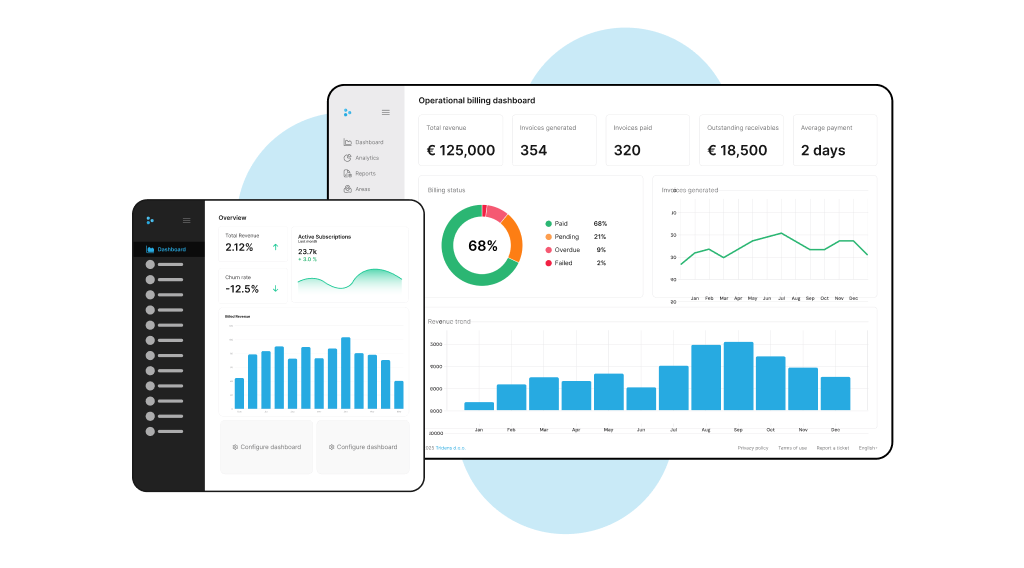
Tridens Monetization gives you the agility to launch new services quickly, the reliability to scale without breaking, and the simplicity to operate without a team of specialists.
Book a demo today and discover what modern billing should feel like.
FAQs
For smaller operators, Tridens Monetization and Optiva typically offer the best balance of functionality and implementation speed.
Both platforms provide enterprise-grade billing capabilities without the complexity and resource requirements of larger systems like Amdocs or Oracle BRM.
Replacement costs vary based on company size, transaction volume, and required features.
While legacy solutions like Amdocs can cost $200K-$2M+ in licensing alone, modern cloud-native alternatives offer more transparent, scalable pricing models that can reduce total cost of ownership by 30-60%.
Yes, most modern alternatives are specifically built for next-generation services.
Platforms like Tridens Monetization, MATRIXX, and Optiva offer real-time charging features, support for network slicing, IoT monetization, and flexible pricing models that traditional systems like Netcracker struggle to handle efficiently.
Cloud-native billing platforms like Tridens and MATRIXX are built specifically for cloud deployment, with better scalability, faster updates, and lower infrastructure costs.
Traditional systems like Netcracker were originally designed for on-premise deployment and later adapted for cloud, which can create performance and integration limitations.
Ready to get started?
Learn how your business can thrive with Tridens Monetization for Communications.
Schedule a Demo