The Electric Vehicle (EV) charging operations are undergoing a dramatic transformation led by Artificial Intelligence (AI). From Dynamic Load Balancing to hyper personalized user experiences and dynamic pricing, AI is turning from a nice-to-have to a must-to-have.
Table of contents
The department of energy predicts that there will be over 30 million EVs projected on U.S. roads by 2030.
The demand for efficient and reliable charging infrastructure has never been more urgent.
However, the rapid growth of EVs is being hampered by persistent challenges within the public charging network.
EV charge operators currently struggle with escalating maintenance costs, suboptimal energy use, and revenue leakage.
Drivers, on the other hand, face frustrations such as station downtime, long wait times, and inconsistent pricing.
In a rare case where the EV operator and drivers’ issues persist, the adoption of electric vehicles could significantly slow down.
Artificial Intelligence (AI) offers a revolutionary pathway to address both EV charge operator and drivers’ roadblocks by transforming the traditional reactive model of EV charging into a predictive, data-driven system.
Today, AI enables EV charge operators to monitor and manage EV charging stations with precision, while providing drivers with a seamless and responsive experience.
This article delves into the current challenges in the EV charging market, the transformative power of AI, and how strategic adoption now can establish market leadership.
The Current State of EV Charging Operations
Despite an extensive network of over 60,000 public EV charging stations in the U.S., and about 6 million public chargers globally; operational challenges remain severe.
Approximately one in four charging stations is non-functional at any given time due to outdated hardware, insufficient monitoring, and reactive maintenance strategies.
These operational hiccups have significant financial and reputational implications for EV charging operators.
The key pain points for EV charge operators include:
- High Maintenance Costs: Maintenance and repair can consume up to 40% of an operator’s total budget, yet traditional practices are often inefficient and unable to predict failures.
- Static Pricing Models: Most EV charging stations use fixed pricing structures that do not take into account fluctuating grid demand or renewable energy availability, leading to unprofitable sessions or lost opportunities for higher margins.
- Low Customer Satisfaction: With user satisfaction rates around 60%, drivers frequently express frustration over stations that are either out of order or crowded when they arrive.
- Isolated Station Management: Most EV charging stations are managed in silos, without centralized monitoring or real-time data integration. This results in poor utilization, missed revenue opportunities, and eroded driver trust when the promised infrastructure fails.
This reactive and fragmented approach not only limits the scalability of the EV charging network but also hinders the broader adoption of electric vehicles.
The EV charge industry needs a systemic transformation that leverages cutting-edge technology to anticipate, adapt, and optimize performance.
Integrating EV charge operations with AI is the answer.
AI Applications Revolutionizing EV Charging Operations
Artificial intelligence enables a holistic transformation of the EV charging ecosystem by embedding intelligent decision-making into every layer of operations—beginning with energy management and on to maintenance, EV charge network optimization, seamless billing, and faster customer support.
Smart Grid Integration & Energy Management
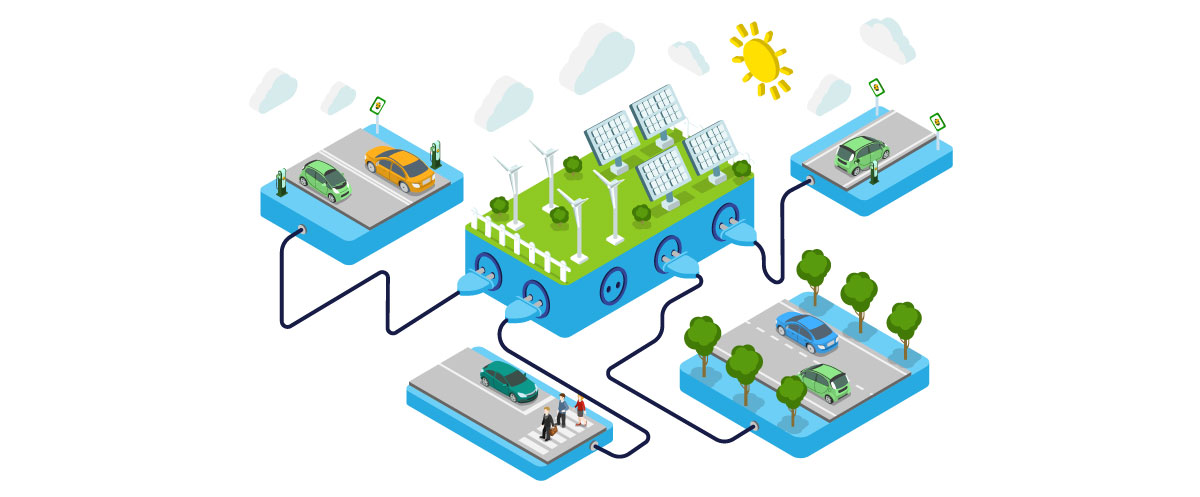
AI is redefining how energy is managed and distributed across the EV charging infrastructure. By analyzing vast data sets including weather patterns, historical usage, and grid signals, AI can forecast energy demand with over 90% accuracy up to 24 hours in advance.
This precision allows operators to strategically procure electricity during off-peak hours, leading to cost reductions of up to 30–40%.
Smart EV Charging: Unlocking Its Full Potential
Dynamic Load Balancing (DLB)
Dynamic load balancing ensures your EV-charging network always uses power efficiently by automatically distributing available energy across all active charging sessions.
The system adjusts in real time to prevent overloads and keep charging smooth, even when multiple vehicles plug in at once or building demand changes.
With AI-enhanced load balancing, the platform can predict usage patterns and grid conditions, allowing it to optimize power allocation proactively.
Dynamic load balancing gives you faster, more reliable charging without expensive electrical upgrades—making your operations more scalable, cost-efficient, and future-ready.
In real-time pricing models, AI adjusts rates based on demand, competitor pricing, and user behavior. This maximizes revenue while improving the utilization rate of charging stations.
This data-driven approach ensures that each station operates at its most profitable and efficient capacity while aligning with broader grid sustainability goals.
Predictive Maintenance & Reliability
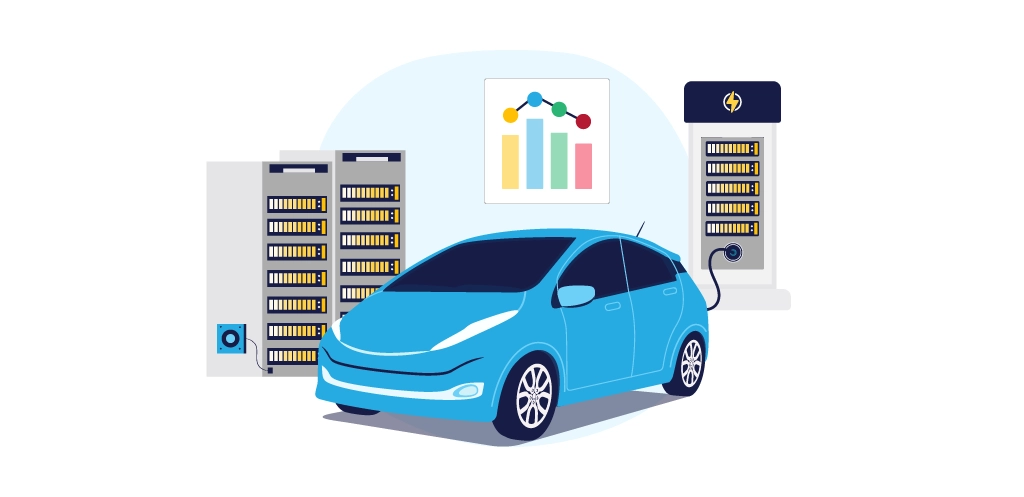
One of the most promising applications of AI in EV charging is predictive maintenance, which significantly reduces downtime and improves the reliability of charging stations.
In modern EV-charging infrastructure, IoT sensors are often built into connectors, power modules, cooling systems, and even cable assemblies.
These sensors stream real-time data such as temperature, current flow, vibration, resistance, and cooling performance.
When this data is fed into AI models, the system can detect abnormal patterns and predict component failures weeks before they occur.
Early adopters of AI-driven maintenance report a 70% reduction in unplanned downtime, which directly translates to higher reliability and user satisfaction.
Machine learning algorithms detect subtle anomalies such as temperature spikes, voltage fluctuations, and mechanical wear patterns, enabling operators to schedule maintenance before a breakdown occurs.
Intelligent Navigation & Charging Route Optimization
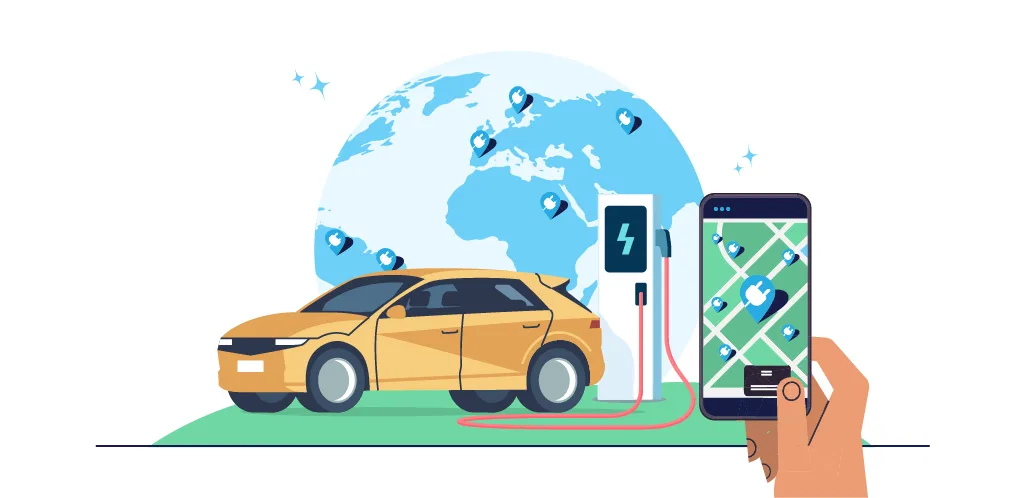
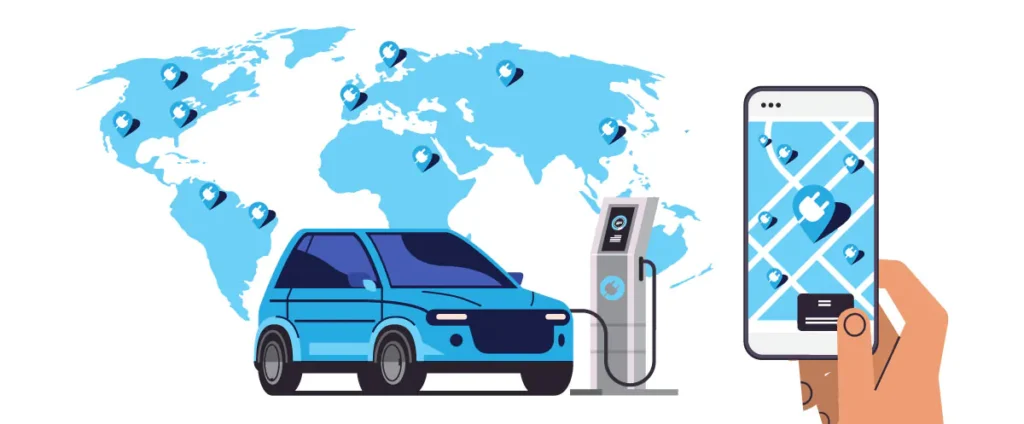
AI is also transforming how drivers navigate to the most suitable charging stations. Traditional routing systems lack real-time visibility into station availability, creating unnecessary detours and driver frustration.
These systems consider factors such as current usage, battery state, driver preferences, and even local traffic to suggest the fastest and most reliable routes.
This leads to 40% shorter wait times and 25% higher station utilization for operators. As a direct consequence, driver range anxiety diminishes, and overall satisfaction increases—both critical for encouraging broader EV adoption.
Furthermore, these intelligent EV charger navigation solutions support fleet management by optimizing charging schedules for commercial vehicles, ensuring that charging is integrated efficiently into daily operations.
Dynamic Pricing & Revenue Optimization
AI is revolutionizing the economic model of EV charging through dynamic pricing.
Unlike static pricing models, AI systems continuously adjust rates in real time based on multiple variables: time of day, grid load, energy costs, and even local events that influence demand.

During peak hours, dynamic pricing can surge pricing, encouraging drivers to shift their charging sessions to less congested periods while capturing higher revenues for operators.
In addition, AI can personalize tariffs and packages for frequent users or price-sensitive customers, fostering loyalty and recurring revenue.
By understanding usage patterns, AI can also identify the optimal pricing window for station expansion, offering a 30–40% improvement in forecasting accuracy.
Dynamic pricing and revenue not only maximize revenue but also ensure sustainable growth for charging networks.
AI in Enhancing the Customer/Driver Experience
AI is not just for operators; it’s also creating a seamless and personalized experience for drivers.
Hyper personalized user profiles can be generated by analyzing charging behavior and personal preferences, delivering tailored recommendations such as preferred charging times, station preferences, or even personalized reminders to begin a charging session.
Over time, these AI-powered recommendations become more accurate and impactful, increasing app engagement by up to 60% and driver retention by 35%.
In terms of payment and billing, AI automates the entire transactional process, including handling multiple payment methods, subscription management across different platforms, and cross-network reconciliations.
This level of automation results in a 20% reduction in failed transactions and 99.8% billing accuracy, ensuring a smooth and trustworthy user experience.
Proactive customer support using AI service desks is another area where AI excels. By monitoring charging sessions in real time, AI can detect anomalies or disruptions and initiate corrective actions before the driver is even aware of the issue.
When support is required, AI-powered chatbots resolve 80% of user queries instantly, while complex cases are escalated with detailed context, improving resolution times from hours to minutes.
AI for Operational Efficiency & Cost Reduction
The integration of AI also leads to significant cost savings and improved efficiency across EV charging operations.
Revenue Recognition & Management Platforms
Revenue recognition and management platforms, powered by AI, process millions of data points daily, allowing for auto-adjustment of pricing, load distribution, and maintenance schedules. This results in a significant drop in operational overhead, as manual tasks are replaced by intelligent automation.
EV charge operators gain full visibility into station utilization, energy costs, and performance trends, enabling data-driven decision-making at scale.
Energy Cost Management
Energy cost management is further optimized through time-of-use strategies, where AI automatically shifts charging sessions to lower-cost periods.
EV charge operators can also avoid costly demand charges by managing peak periods, and by participating in grid ancillary services, they can generate additional revenue from excess energy or vehicle-to-grid (V2G) systems.
What Does This Mean For The Future?
There is little doubt that the power of AI in EV charging is only expected to grow.
Vehicle-to-grid (V2G) integration will allow EVs to supply power back to the grid during peak demand, a function that will be managed and optimized by AI algorithms.

With enhanced machine learning, higher IoT sensor density, and autonomous vehicle integration, charging networks will become even more intelligent and efficient.
Within the next five years, AI will become the de facto standard across the EV industry. Companies that delay adoption risk falling behind.
Artificial Intelligence is not just an option for the EV charging industry—it is a necessity.
The outcomes from AI will position early adopters as market leaders and ensure that they remain competitive in an increasingly dynamic and data-driven environment.
For charging operators and fleet managers, the question is no longer whether to adopt AI—but how quickly? Now is the time to embrace AI and redefine the future of EV charging.
Choosing Your EV Charging Partner
Tridens Technology is at the forefront of this AI transformation with its unified SaaS platform that powers the entire EV charging ecosystem.
Our platform is designed for a diverse range of clients including EMSPs, CPOs, EVSPs, EV fleets, automotive companies, and manufacturers.
We support all business models B2C, B2B, B2X—offering a versatile, white-labeled, and hardware-agnostic solution.
To learn more about Tridens EV Charge schedule a demo or talk to us!