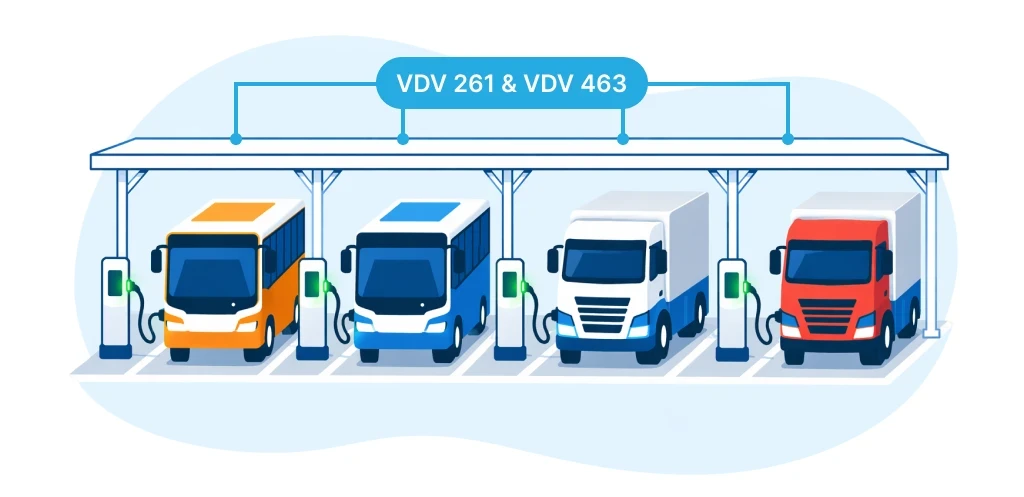


VDV 261 и VDV 463 - это два стандарта, от которых зависит, будет ли ваш автобусный парк работать без сбоев завтра утром - или автобус уедет холодным, опоздавшим и полузаряженным.
Оглавление
- Что на самом деле представляют собой VDV 261 и VDV 463
- Почему VDV 261 и VDV 463 имеют значение для автобусных парков
- VDV 463: как депо общается с системой зарядки
- VDV 261: как система зарядки общается с автобусом
- VDV 261 и VDV 463 в типичном депо ночью
- Почему большинство программ для зарядки EV не работает на VDV 261 и VDV 463
- Как выглядит хорошая поддержка VDV 261 и VDV 463
- VDV 261 и VDV 463 за пределами автобусов
- Что вы получите, если VDV 261 и VDV 463 будут работать правильно
- Как Tridens поддерживает VDV 261 и VDV 463
- Резюме: VDV 261 и VDV 463 имеют большее значение, чем признают производители
- Вопросы и ответы о VDV 261 и VDV 463
Каждое утро автобус должен вовремя покинуть автобазу. Аккумуляторы полны. В салоне тепло. Готовность к приему первого пассажира. Водителю все равно, по какому стандарту работает зарядное устройство. Но оператору автобазы не все равно, потому что, когда в программе зарядного устройства отсутствуют VDV 261 и VDV 463, все тихо ломается.
Это руководство предназначено для специалистов, занимающихся планированием, закупкой и эксплуатацией зарядной инфраструктуры автобусных парков. К концу руководства вы будете знать, что делают VDV 261 и VDV 463, почему они важны и что нужно спрашивать у каждого. Программное обеспечение для зарядки EV продавца до подписания договора.
 Загрузка ...
Что на самом деле представляют собой VDV 261 и VDV 463
VDV 261 и VDV 463 - это два стандарта связи от Verband Deutscher Verkehrsunternehmen - Немецкая ассоциация транспортных компаний. Они были построены по одной причине: чтобы обеспечить работу электробусных парков.
Подумайте вот о чем. Дизельное депо - это просто. Подъезжает автобус. Кто-то наполняет бак. Работа сделана. Автобаза электрических автобусов не так проста. Автобус подъезжает. Его нужно зарядить. Он должен быть теплым или холодным до приезда водителя. Он должен быть готов к определенному времени. Многие автобусы прибывают одновременно. Некоторые уезжают раньше других. Стоимость энергии меняется в течение дня. У энергосистемы есть ограничения.
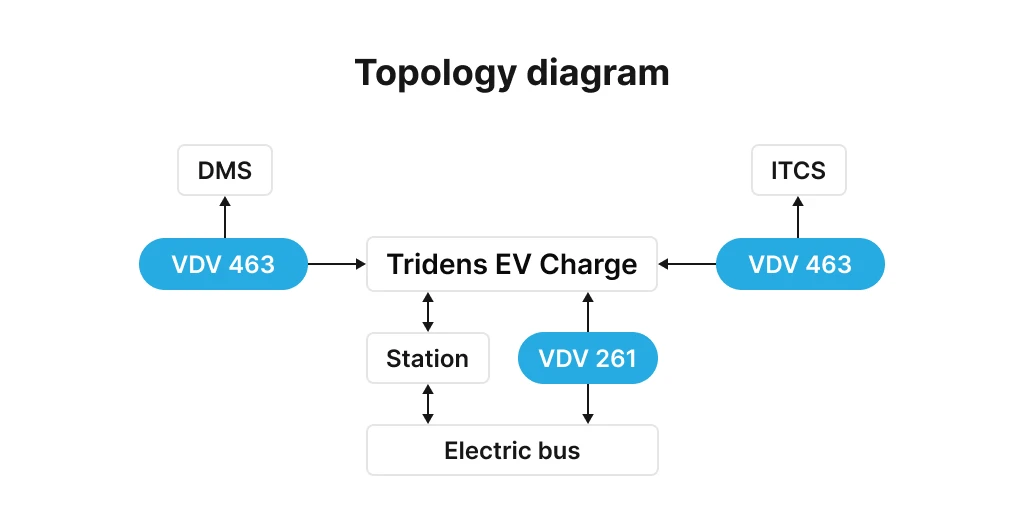
VDV 261 и VDV 463 - это то, как "мозг" депо общается с зарядными устройствами и автобусами, чтобы все это работало одновременно. VDV 463 обеспечивает связь между центральными системами депо и системой управления зарядкой. VDV 261 обеспечивает связь между система управления зарядкой и сам автомобиль.
Вместе они превращают депо, заполненное отдельными машинами, в единую слаженную операцию.
Почему VDV 261 и VDV 463 имеют значение для автобусных парков
Большинство поставщиков CMS не говорят вам об этом. Система зарядки только с OCPP может запускать и останавливать сеанс зарядки. И все. Она не знает расписание автобусов. Она не знает, какой автобус завтра уедет первым. Она не знает, насколько холодно в салоне. Она не знает, когда нужно предварительно прогреть батарею, чтобы автобус мог принять полную мощность, как только он подключится к сети.
Без VDV 261 и VDV 463 команды депо заполняют эти пробелы вручную. Электронные таблицы. Телефонные звонки. Ручное управление. Это работает до тех пор, пока ваш парк не превысит 20 автобусов. Тогда он начинает ломаться. Один автобус уходит на холод. Другой сидит на зарядке, которая ему не нужна. Счета за электроэнергию растут, потому что зарядка происходит в пиковые часы, а не в непиковые.
VDV 261 и VDV 463 устраняют эти пробелы. Система депо сообщает системе зарядки, когда каждый автобус должен выйти и в каком состоянии. Система зарядки планирует энергию и предварительное кондиционирование. Автобус готов к работе вовремя. Каждый раз.
VDV 463: как депо общается с системой зарядки
VDV 463 - это стандарт для восходящего потока. Он соединяет системы планирования депо - те, которые знают расписание на завтра - с системой зарядки. Обе системы общаются через WebSocket с помощью сообщений в формате JSON.
Вот как это выглядит на практике. Система управления складом (DMS) или система управления интермодальными перевозками (ITCS) отправляет запрос системе взимания платы. В запросе говорится примерно следующее: “Автобус 42 прибывает сегодня в 22:15 на зарядное устройство 7. Завтра он отправляется в 05:30. Зарядите его как минимум до 90%. Предварительно прогрейте салон перед отправлением”. Система зарядки получает это. Она планирует сеанс. Она сообщает о статусе, состоянии батареи, использованной энергии и любых ошибках по пути.
В этом и заключается суть VDV 463. Одна сторона говорит о том, что нужно флоту. Другая сторона говорит о том, что происходит. Обе стороны синхронизируются всю ночь напролет.
Чем VDV 463 отличается от OCPP
OCPP - это стандарт между системой зарядки и зарядным устройством. Это очень важно. Но OCPP не знает расписания автобусов. Она не знает, когда автобусы покидают депо. VDV 463 заполняет этот пробел. Это слой над OCPP. Любой Система управления зарядными станциями EV Построенный для автобусов, он нужен и тем, и другим.

VDV 261: как система зарядки общается с автобусом
VDV 261 - это вторая половина истории. Это стандарт между системой управления зарядкой и самим автомобилем. Он работает поверх ISO 15118 Подключение - то же самое, что используется для Plug and Charge.
VDV 261 - это то, что делает возможным предварительное кондиционирование. Предварительное кондиционирование означает подготовку автобуса до приезда водителя. В холодную погоду аккумулятор разогревается, чтобы он мог принять быструю зарядку и выдать полную мощность. Салон обогревается или охлаждается, чтобы пассажирам было комфортно с первой минуты. Водитель экономит время, потому что автобус не стоит на месте, оттаивая или охлаждаясь.
Через VDV 261 автобус сообщает системе зарядки: “Я здесь. Мой VIN такой-то. Моя батарея находится на отметке 18%. Мне нужно 12 минут для предварительного прогрева батареи и 8 минут для обогрева салона”. Система зарядки отвечает: “Вот когда вы уезжаете. Вот целевое состояние заряда. Вот когда нужно запустить систему отопления, вентиляции и кондиционирования”. Пока автобус заряжается, они ведут постоянную светскую беседу.
Без VDV 261 предварительное кондиционирование либо не выполняется, либо выполняется наугад. С VDV 261 это происходит точно и автоматически.
VDV 261 и VDV 463 в типичном депо ночью
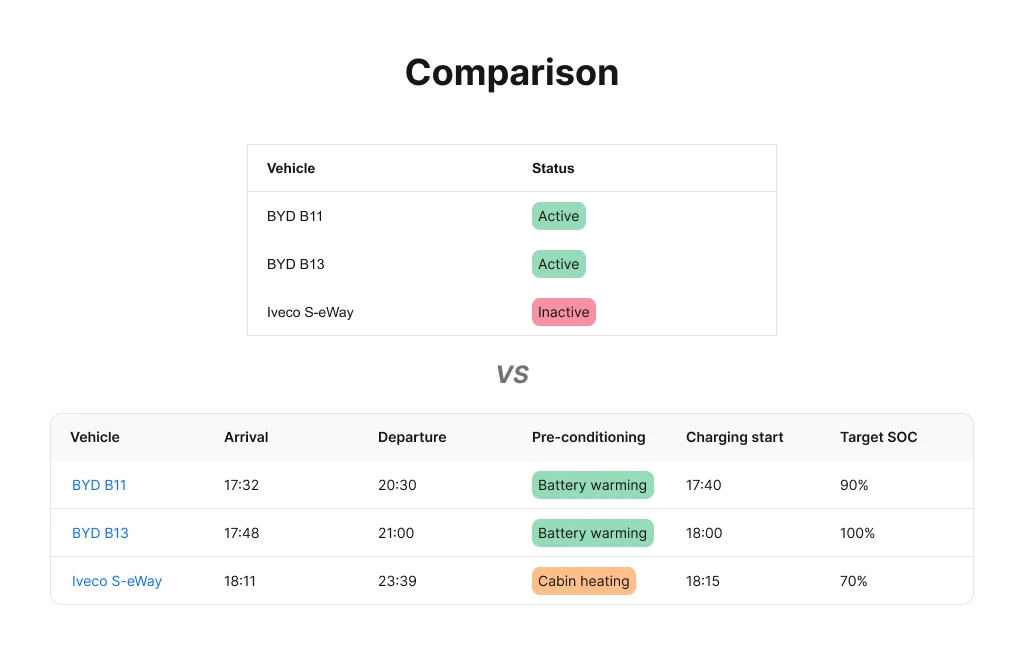
Давайте рассмотрим реальный пример. Сейчас 22:10. Операции автопарка зафиксировали расписание на завтра. Через VDV 463 это расписание поступает в систему управления зарядкой. Теперь CMS знает, какой автобус куда идет, насколько полна должна быть каждая батарея и когда каждый автобус отправляется.
В 22:15 автобус 42 прибывает к зарядному устройству 7. Водитель подключается к нему. OCPP сообщает CMS о начале сеанса. Через VDV 261 автобус сообщает свой VIN, текущий уровень заряда батареи и предполагаемые потребности в предварительном кондиционировании.
CMS планирует. Он знает, что автобус 42 отправляется в 05:30. Он знает, что электричество дешевле всего с 01:00 до 05:00. Она знает, что у автобазы есть лимит сети, который она не может превысить. Сначала он заряжает автобус 42 медленно, в дешевые часы увеличивает темп и заканчивает работу точно в срок. В 05:00 он начинает предварительный нагрев батареи. В 05:15 он начинает прогревать салон. В 05:30 автобус 42 выезжает с полным аккумулятором, теплым салоном и водителем, которому не пришлось делать ничего особенного.
Тем временем CMS делает это для 80 других автобусов. Все одновременно. Вот для чего нужны VDV 261 и VDV 463.
Почему большинство программ для зарядки EV не работает на VDV 261 и VDV 463
Вот неудобная правда. Большинство Компании по разработке программного обеспечения для зарядки электромобилей были созданы для общественных зарядок. Автомобили. Парковки. Торговые площадки. Они свободно говорят на языке OCPP. Но VDV 261 и VDV 463 нет в их дорожной карте. Или они есть - как “скорое появление”, которое ожидается уже два года.
Это происходит по нескольким причинам. VDV - это европейский транспортный стандарт. Большинство поставщиков CMS ориентированы на более широкие рынки. Создание поддержки VDV требует реальных инженерных решений - рукопожатия WebSocket, схемы JSON, управление сертификатами по ISO 15118, обработка последовательности сообщений, логика тайм-аута, предварительное кондиционирование рабочих процессов. Это не проект выходного дня. Это месяцы работы. И клиенты, которым это нужно, - операторы депо - не так громко заявляют о себе на рынке, как публичные CPO.
Поэтому, когда оператор депо проводит тендер, обычно происходит следующее. Отвечают пять поставщиков CMS. Все они утверждают, что “готовы к эксплуатации”. Трое никогда не слышали о VDV 463. У одного он есть на слайде, но не в производстве. Один действительно создал ее. Чтобы понять разницу, нужно задать несколько сложных вопросов.
Как отличить реальную поддержку VDV 261 и VDV 463 от маркетинговых заявлений
Вопросы, которые нужно задавать любому поставщику:
- Какие типы сообщений VDV 463 вы поддерживаете в производстве сегодня? Как минимум, вам нужны ProvideChargingRequest, ProvideChargingInformation и BootNotification.
- Могу ли я увидеть вашу конечную точку VDV 463 WebSocket в песочнице? Продавец с реальной поддержкой может показать вам ее. Продавец, не имеющий такой поддержки, сменит тему.
- Как вы работаете с сертификатами предварительного кондиционирования VDV 261? Реальный ответ включает управление сертификатами по стандарту ISO 15118, хранилищами ключей и рабочими процессами обновления.
- С какими системами депо вы интегрировали VDV 463? Спрашивайте имена. Попросите дать вам рекомендации.
- Что произойдет, если ITCS отправит противоречивое обновление расписания в середине сеанса? У настоящего поставщика есть четкий ответ, включающий правила приоритетов и расписания работы устройств.
- Поддерживается ли одновременная зарядка по расписанию и разовая зарядка? Большинству операторов нужны оба варианта.
Если поставщик испытывает трудности с любым из этих пунктов, примите это как сигнал. VDV - это такая вещь, которую можно по-настоящему понять, только создав ее.
Как выглядит хорошая поддержка VDV 261 и VDV 463
Система управления зарядкой, которая действительно поддерживает VDV 261 и VDV 463, хорошо справляется с несколькими специфическими задачами.
Он принимает запросы на зарядку сразу от нескольких систем депо. В одном депо может использоваться DMS. В другом может использоваться ITCS. Некоторые используют обе системы. CMS обрабатывает их все с помощью чистого профиля и конфигурации платформы.
Он поддерживает живое соединение. VDV 463 работает через WebSocket. Это означает, что соединение остается открытым всю ночь. Пинг и понг сообщения поддерживают его. Если соединение обрывается, CMS переподключается и догоняет его.
Он правильно передает данные. Система депо не просто хочет отправлять инструкции. Она хочет видеть, что происходит. Состояние батареи. Поступившая энергия. Любые сбои в зарядке. Состояние предварительного кондиционирования. Хорошая CPMS сообщает обо всем этом с настраиваемым интервалом, а не только когда что-то ломается.
Она уважает приоритеты парка. Если в депо говорят, что автобус 42 важнее автобуса 18, CPMS это соблюдает. Когда сеть напряжена, она заряжает приоритетные автобусы в первую очередь. Когда один автобус заканчивает работу, энергия перетекает к следующему в очереди. Это тот тип интеллектуальная зарядка EV VDV делает это возможным.
Он обрабатывает предварительное кондиционирование как обычную часть рабочего процесса. А не как нечто второстепенное. Предварительный прогрев автобуса планируется одновременно с его зарядкой. Оба процесса завершаются в нужное время.
VDV 261 и VDV 463 за пределами автобусов
Стоит знать одну вещь. VDV был разработан в первую очередь для автобусов. Но стандарты одинаково хорошо применимы к любому электрический автомобиль флот который работает по расписанию. Большегрузные автомобили на логистических складах. Автопарки для сбора мусора. Муниципальные служебные автомобили. Наземное вспомогательное оборудование для аэропортов.
Любой автопарк, который прибывает в известное время, нуждается в зарядке и должен уехать в известное время, может воспользоваться преимуществами VDV 261 и VDV 463. Принципы одинаковы. График работы. Зарядка и предварительное кондиционирование запланированы. Готовность в срок. Отчитался.
Именно поэтому мы встроили поддержку VDV 261 и VDV 463 в Tridens EV Charge таким образом, чтобы она служила в первую очередь автобусам, но при этом естественным образом распространялась и на другие варианты использования в тяжелых условиях. Одна CMS. Множество типов автопарков. Одни и те же стандарты под капотом.
Готовы приступить к работе?
Узнайте, как ваш бизнес может процветать с помощью Tridens EV Charge для автопарков.

Что вы получите, если VDV 261 и VDV 463 будут работать правильно
Давайте конкретизируем последствия для бизнеса. Когда VDV 261 и VDV 463 установлены и работают, команды депо перестают заниматься пожаротушением. Диспетчеры перестают звонить водителям и говорить: “Пропустите второй рейс, автобус 14 не готов”. Счета за электроэнергию снижаются, потому что зарядка автоматически переключается на дешевые часы. Комфорт в салоне повышается, потому что предварительное кондиционирование осуществляется последовательно, а не вручную. Время работы автопарка увеличивается, потому что меньше автобусов пропускают свой первый рейс.
Это не абстрактные преимущества. Они отражаются в ежемесячном операционном отчете. Меньше сверхурочных. Меньше затрат на электроэнергию. Меньше пробелов в обслуживании. Повышение удовлетворенности водителей. Более чистые отношения между автобазой и автопарком.
А с точки зрения ИТ интеграция перестает быть индивидуальным проектом. VDV 261 и VDV 463 - это стандарты. Вы создаете один раз, а интегрируете много раз. Вам не нужно переписывать интерфейс каждый раз, когда вы меняете поставщика или добавляете новый склад.
Как Tridens поддерживает VDV 261 и VDV 463
Мы будем говорить об этом прямо. Tridens EV Charge - это система управления зарядами созданный для CPOs, EMSPs, и операторы флота. Опора VDV 261 и VDV 463 встроена в платформу, а не в скользящий элемент.
На стороне VDV 463 платформа принимает запросы на зарядку от систем управления депо и транспортом, отслеживает их в виде расписаний работы устройств и управляет поведением зарядных устройств на основе этих расписаний. Отчетность передается в вышестоящие системы с настраиваемым интервалом. На стороне VDV 261 данные о транспортном средстве проходят через ISO 15118 в платформу, запросы на предварительное кондиционирование поступают обратно, и все остается синхронизированным в течение всего сеанса зарядки.
Мы уже работаем с одним из крупнейших европейских операторов автобусов именно по такой схеме. И мы внедряем тот же подход для парков большегрузных автомобилей и сетей на базе депо. Если вам нужны подробности этого кейса - как была разработана интеграция, что увидела команда автобазы в первые 90 дней - мы готовы поделиться ими. Просто спросите.
Резюме: VDV 261 и VDV 463 имеют большее значение, чем признают производители
VDV 261 и VDV 463 не являются нишевыми. Это то, как на самом деле работают современные автобусные парки. Любая CMS, которая пропускает их, перекладывает тяжелую работу на плечи вашей команды. Электронные таблицы. Телефонные звонки. Холодные кабины в 6 утра. Счета за электроэнергию, которые не должны были быть такими высокими.
Если вы ищете платформу управления зарядкой для депо, то VDV 261 и VDV 463 - это обязательный элемент. Задавайте сложные вопросы. Ищите рекомендации по производству. Не соглашайтесь на слова “в дорожной карте”.”
Мы построили Tridens EV Charge для автопарков именно для этого. Когда вы будете готовы увидеть, как VDV 261 и VDV 463 работают на реальной платформе - запланируйте демонстрацию.
Вопросы и ответы о VDV 261 и VDV 463
Нет. Нет такого закона, который заставлял бы депо использовать VDV 261 и VDV 463. Но многие органы управления общественным транспортом в Германии, Австрии, Нидерландах и других странах теперь требуют или настоятельно предпочитают поддержку VDV в новых тендерах.
Для большинства операций в депо необходимо и то, и другое. VDV 463 соединяет ваши системы планирования с CMS. VDV 261 соединяет CMS с транспортным средством. Они выполняют разные задачи. Если у вас есть только VDV 463, вы можете планировать зарядку, но не сможете правильно подготовить транспортные средства. Если у вас есть только VDV 261, вы можете планировать предварительную подготовку, но не можете синхронизировать ее с расписанием депо.
OCPP работает между CMS и зарядным устройством. VDV 463 работает между CMS и вышестоящими системами, такими как DMS и ITCS. Обе системы необходимы. OCPP сама по себе не знает расписание вашего автопарка. VDV 463 заполняет этот пробел.
Да. VDV 261 работает на канале связи ISO 15118. Это означает, что зарядное устройство и автомобиль должны поддерживать ISO 15118, а CMS должна управлять сертификатами, которые поставляются с Plug and Charge.
Да. Стандарты были написаны для автобусных парков, но протоколы подходят для любого парка большегрузных автомобилей, работающих по расписанию. Логистические склады, вывоз мусора, наземные автопарки аэропортов и многое другое.
При использовании CPS, которая уже поддерживает стандарты в производстве, интеграция с новой системой депо обычно занимает несколько недель. С CMS, которая создает VDV на ходу, это может занять много месяцев. Это главная причина проверить готовность поставщика перед подписанием договора.
Зарядным устройствам не нужно говорить на языке VDV. VDV 463 соединяет вышестоящие системы с CMS. VDV 261 соединяет CMS с автомобилем. Зарядные устройства по-прежнему используют OCPP. Это означает, что VDV работает с любым зарядным устройством, совместимым с OCPP - ABB, Kempower, Alfen, Siemens и 90 с лишним других.
Стандарты поддерживаются VDV и постоянно развиваются. Хороший поставщик CMS обязуется отслеживать эти изменения и внедрять их в свой продукт. Спросите, как ваш поставщик справляется с этой задачей.