EV charging station contractors that are in charge of EV charging station installation are in high demand as the number of electric vehicles grows daily.
However, the current demand is nothing compared to the demand we will see in the coming years, with the amazing number of charging stations still needing to be built to support the coming e-mobility revolution.
Table of contents
- What are EV Charging Station Contractors?
- Are EV Charging Station Contractors in Demand?
- Types of Electric Vehicle Supply Equipment (EVSE)
- Installing and Maintaining EV Charging Stations
- Support & Maintainance
- How to Become an EV Charging Station Contractor?
- How to Choose EV Charging Station Contractors?
- How Can Tridens EV Charge Software Help?
What are EV Charging Station Contractors?
EV charging station contractors are capable and licensed companies to install and energize an EV charging station.
They can have a license to do this for one or more charging station manufacturers.
Altogether, EV charging station contractors have duties that revolve around the engineering, planning, and construction of EV charging stations.
Besides that, they can also provide maintenance and repair work if needed later.
Are EV Charging Station Contractors in Demand?
As we already described in our blog on EV charging infrastructure challenges, alone in the EU, we need up to 65 million new EV chargers (home+public) by 2035.
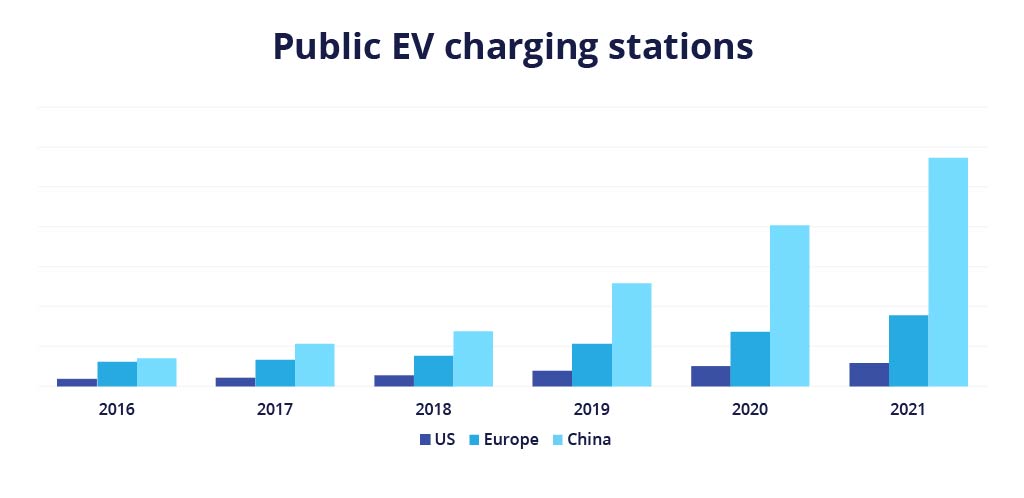
Close to 7 million of them will be public charging points.
Furthermore, according to the Brattle Group, the US needs 6-10 million home chargers and close to 2 million public EV charging stations by 2030.
Basically, a few million EV charging stations will need to be installed every year in Europe and the US alone.
The recent electric car sales statistics, including statistics on the growth of public EV charging stations, confirm this trend.
So the answer is yes, the market will need a lot of companies capable of installing EV chargers as this is generally regarded as a fast-growing industry.
Types of Electric Vehicle Supply Equipment (EVSE)
Electric Vehicle Supply Equipment (EVSE) is the term that describes all equipment needed to deliver electrical energy from the source to the electric vehicle.
EVSE provides the power and communicates via EV charging software between the charging station and the vehicle to ensure that charging is done correctly and safely.
Depending on the power and rate of charging, there are three general levels of EVSE.
Level 1 Chargers
Level 1 charging is charging the electric vehicle directly from the standard 120 V outlet used mainly in North and South America.
It’s the slowest way of charging.
Therefore, most EV owners will use it only in an emergency, as it can take more than 20 hours (4 miles per hour) to charge a battery to 100 miles of range.
The charging is done with a charging cord usually supplied by the EV manufacturer and needs no EVSE installation.
Even on a 220-230 V outlet, charging over cable is slow, so charging directly from the socket is not a real option for EV users who use the vehicle daily.
Level 2 Chargers
Level 2 is the most common mode of charging.
Therefore, most home, workplace, fleet, or public charging stations are or will be Level 2.
Depending on the battery size, they can fully charge an EV battery in 6-12 hours.
However, this charging mode requires the purchase and installation of Level 2 EVSE, and this is where EV charging station contractors will be the busiest in the years to come.
Level 2 EVSE uses a 240 V electrical service for residential or 208 V for commercial applications with a dedicated electrical circuit of 20 to 80 amp (A), depending on the EVSE requirements.
Obviously, these installations must be hard-wired for safe operation and can only be installed by a professional.
Most homes and offices already have electrical service suitable for Level 2 chargers, but a free garage socket doesn’t mean you can simply mount a charger on the wall and plug it into the outlet.
Obviously, in most cases, an electrical service upgrade is needed.
New wiring and modifying the electrical system make the installation more complex.
A site assessment is necessary before installing any Level 2 Ev charging stations.
Load calculation must be made since any home or office will also have many other electricity-consuming devices.
In the best case, the client will consult with EV charging station contractors before purchasing the Electric Vehicle Supply Equipment.
If we look at what future EV charging industry trends predict, anyone installing an EV charger should select Smart EV charging stations.
They should particularly support remote management and smart energy management and scheduling functions like EV Charging load balancing and dynamic EV Charging load management.
Level 3 DC Fast Chargers
DCFC or DC fast-charging EVSE enables fast charging with 50 kW to 150 kW or even 350 kW.
Generally, fast chargers can charge an EV to 80% of battery capacity in 15 to 30 minutes.

They are the perfect solution for motorways or any place where the users want to fast charge and continue with the journey.
Fast chargers are expensive and must be installed by highly skilled and certified EV charging station contractors.
Anyone considering this relatively costly investment will surely go the extra mile to find an appropriate company to handle the project, from planning to final setup.
For more information on charging power and connectors, read our EV charging station solutions blog.
Installing and Maintaining EV Charging Stations
EVSE installations can range from relatively simple jobs to very complex ones, and skilled EV charging station contractors should be able to handle the following duties.
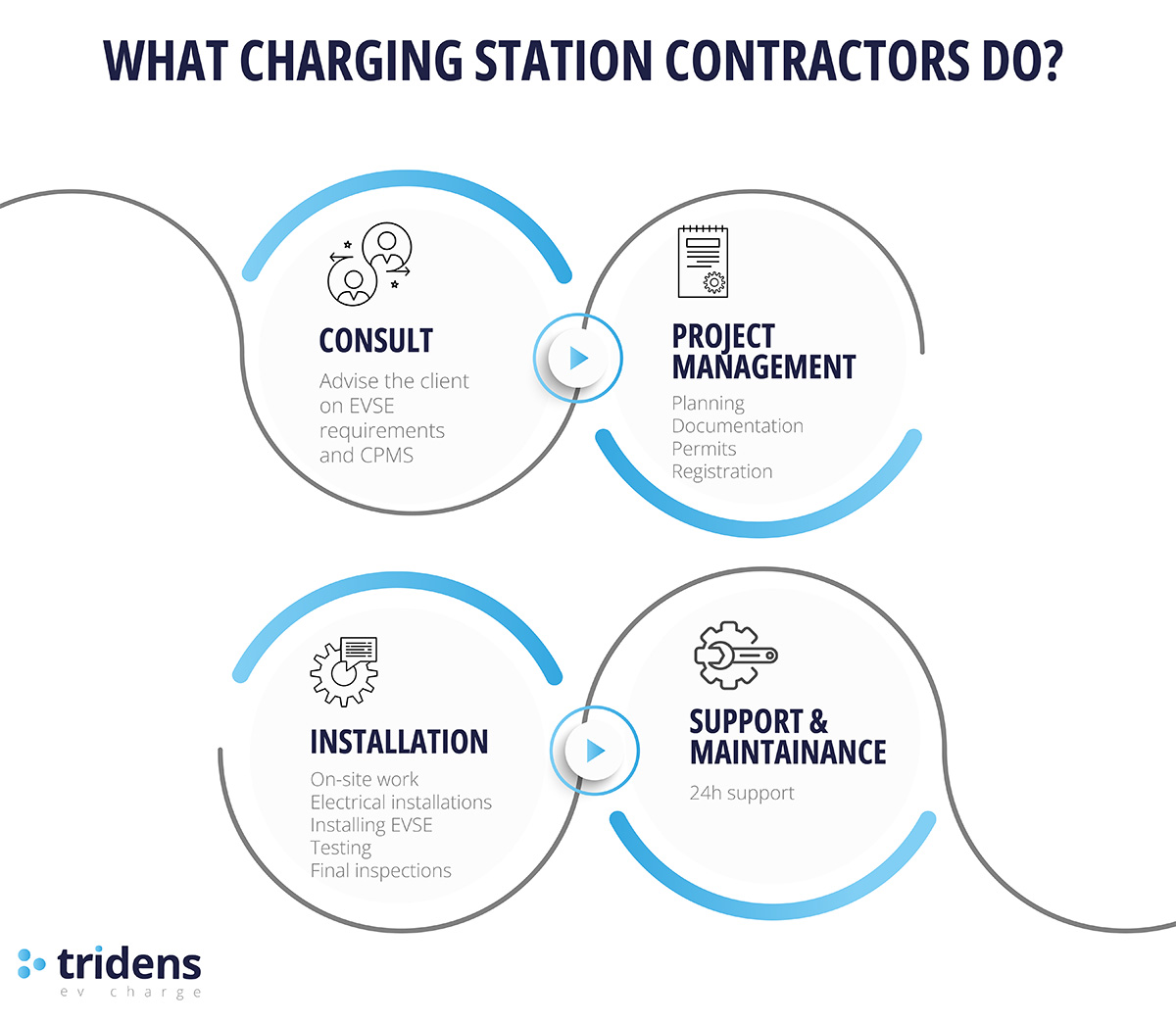
Consultancy
EV charging station contractors must advise the client on all aspects of EVSE needed, including:
- Specification of EV chargers and EVSE needed
- Distribution network operators (DNO) requirements for installation
- Electrical demand and safety requirements
- Charge Point Management System (CPMS)
Project Management
The EV charging station contractors must ensure the project runs smoothly and everything is done according to the requirements of DNOs and different state requirements, so they must handle the following:
- Planning and electrical installation design
- DNO applications
- Apply and obtain approval for a permit
- Purchase necessary equipment (EVSE, wiring, breakers, panels, etc.)
- Payment and management system procurement
- Additions to National Chargepoint Register or other required registers
Installation
EV charging station contractors should provide all installation services, including:
- Coordinate work on site
- Complete service upgrades
- Electrical installation works from power source to station location
- Cable trenching
- Earthing solutions
- Charger mounting groundworks
- Mount Electric Vehicle Supply Equipment
- Install impact-protection devices (bollards, wheel stops, etc.)
- Signage and line marking
- Testing, commissioning, and certification
- Perform final inspection
Support & Maintainance
EV charging station contractors can offer additional services ranging from regular maintenance and inspections (monthly, yearly) to 24-hour on-site support.
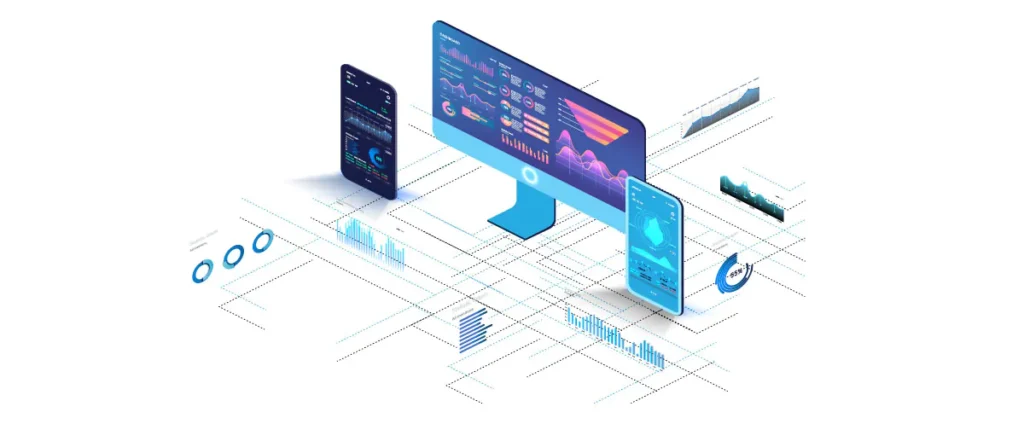
Any company that will provide maintenance and on-site support must be familiar with the Charge Point Management System (CPMS) that a specific charging station or network uses.
It is necessary since the Charge point operator (EV CPO) will provide them with the data needed for repairs.
Our EV charging station management system blog described this in more detail.
How to Become an EV Charging Station Contractor?
Installing EV charging stations, EV charging infrastructure, or building an EV charging network requires unique knowledge and skills.
That is why EV charging station contractors are mainly electrical contractor companies.
Before starting with EVSE installations, and potential EV charging station contractor should receive training and certification from a reliable organization.
Therefore, several organizations have recently begun offering EVSE project and installation training for electrical contractors.
Some of these programs are: Electric Vehicle Infrastructure Training Program (EVITP), Qmerit Certified Solutions Partner program, NICEIC Approved Contractor,…
Eventually, after completing the program, the newly certified EV charging station contractors can partner with one or more companies that sell EVSE and become their licensed installers or offer services independently.
How to Choose EV Charging Station Contractors?
Depending on the type (level) of desired charging stations that need installation, the EV charging station contractors will need different expertise and certificates to perform the installation.
One of the ways to find suitable EV charging station contractors is to look at what EVSE the EV producer recommends.
Some charging solutions manufacturers have partnered with electric vehicle companies to get the title “a preferred EVSE provider.”
So one way of selecting is to look at the brand of EV and what EVSE they recommend.
Certainly, the chosen EVSE provider will have certified EV charging station contractors.
Another way is to contact the utility provider, which will also have a list of certified contractor partners, or research what independent EV charging station contractors are available in the area.
How Can Tridens EV Charge Software Help?
Tridens has developed a cloud-based smart EV charging software that exceeds all the modern Charge Point Management System requirements.
In addition to regular smart charging functions, it also provides advanced remote monitoring, managing, and troubleshooting with real-time logs and analytics.
These functions greatly help EV charging station contractors when setting up the charging stations and later in maintenance and problem-solving.