How it works
Static load balancing shares a fixed limit without measuring other site loads; dynamic load balancing adjusts the limit in real time from site measurements. Power can be split equally or by priority.
Automotive & eMobility
17/11/2026
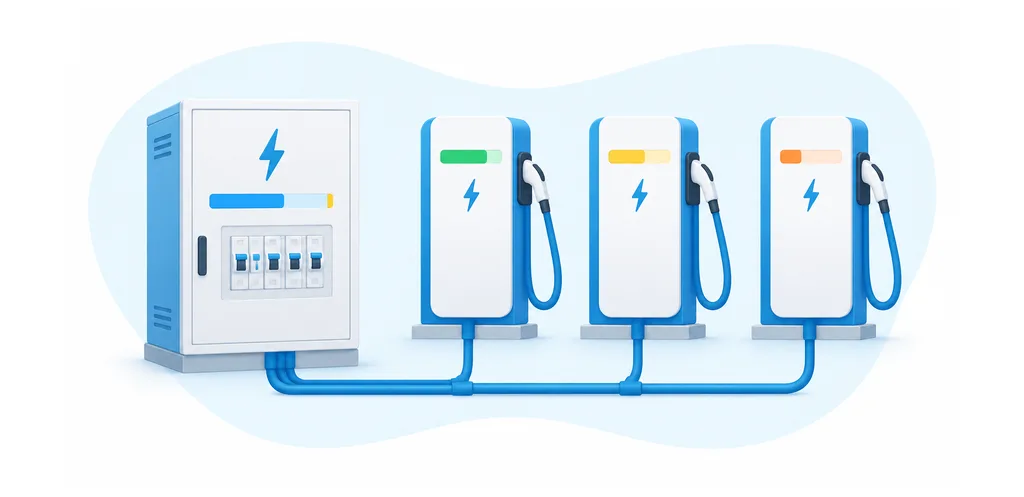
EV charging load balancing is the distribution of available power among the chargers or sessions active at a site, so the total stays within a set limit while each vehicle charges as fast as possible. When a vehicle connects or disconnects, the system recalculates each session's share.
Static load balancing shares a fixed limit without measuring other site loads; dynamic load balancing adjusts the limit in real time from site measurements. Power can be split equally or by priority.
November 27, 2026
EV Charging load balancing is not the same as load management. What is the difference?
Previous term
EV Charging Billing SoftwareNext term
EV Charging Roaming