How it works
It needs interval data from smart meters plus calendars for weekdays, weekends, holidays and seasons. Daylight-saving changes and missing intervals are common sources of billing errors.
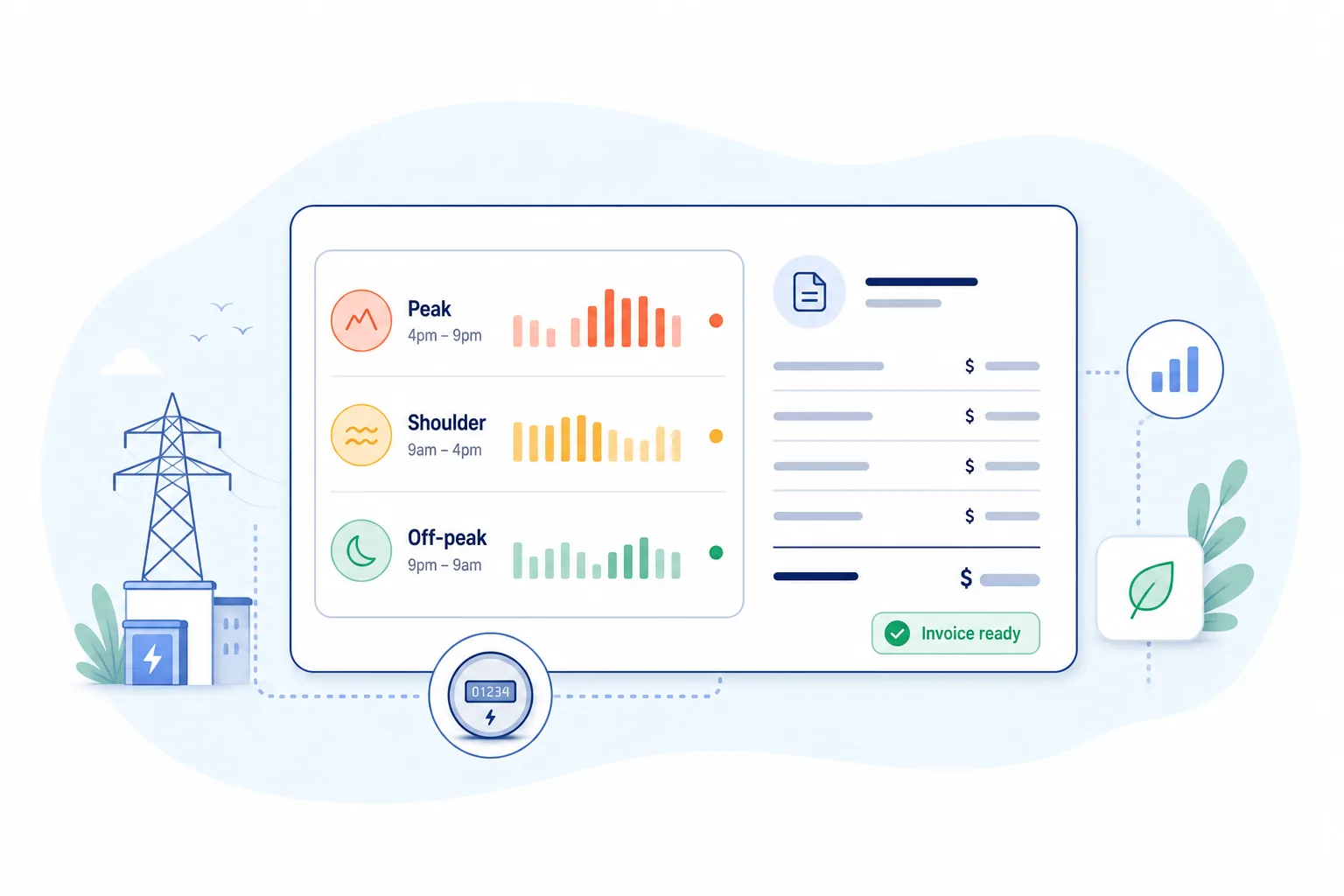
Time-of-use billing is a billing method that charges energy at different rates depending on the time period in which it was consumed. The billing system splits a customer's interval meter data into the tariff's peak, off-peak and other periods, prices each block at its rate, and itemizes the result on the bill.
It needs interval data from smart meters plus calendars for weekdays, weekends, holidays and seasons. Daylight-saving changes and missing intervals are common sources of billing errors.
October 1, 2026
Time-of-use billing helps utilities rate interval usage, price peak demand, improve bill accuracy, and communicate tariffs clearly.
Previous term
Tiered PricingNext term
Time-of-Use Tariff