


フリートネットワークをビジネスの成長に

スマート充電とエネルギー管理
インテリジェントな配電により、充電インフラ全体のエネルギー効率を最大化します。.
- 車両と充電器間の動的な負荷分散
- フリート需要に基づく充電の最適化
- リアルタイムのエネルギー価格に合わせた充電スケジュール
- 資産モニタリング(ソーラーパネル、バッテリー、その他のソース)
このシステムは、インテリジェントに電力を分配し、エネルギー資産を監視し、市場のシグナルを調整することで、効率的かつコスト効率よく車両を稼働させます。.

集中監視とデポの可視化
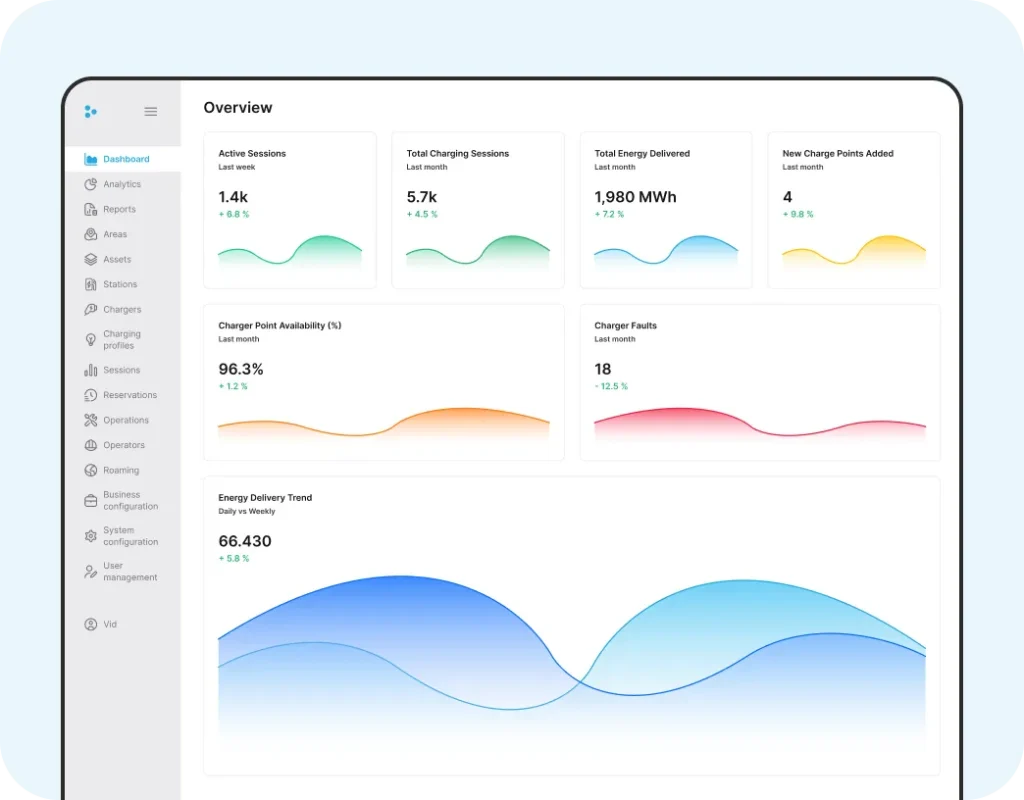
ライブ・インサイト、予測アラート、ライブ・ダッシュボードと自動エネルギー制御による常時アクセスにより、すべてのデポ、充電器、車両を完全に制御できます。.
- 充電器と車両の詳細をリアルタイムで表示するダッシュボード
- 障害、停電、優先的なニーズに対する即時のアラートと通知
- 自己修復機能と自動故障処理
包括的な可視化と自動制御により、充電インフラが健全で応答性の高い状態に保たれ、ダウンタイムが最小限に抑えられます。.
大型車両を運用する事業者が欧州全域で電気自動車ネットワークを拡大する方法
大型車両のフリートが、リアルタイム課金、柔軟な収益化、自動化された財務コンプライアンスにより、EV充電ネットワークをどのように拡張しているかをご覧ください。.

コスト最適化と使用時間スケジューリング
低い電気料金に合わせて充電スケジュールを最適化し、運用準備に影響を与えることなくコストを削減する。.
- エネルギー市場料金に関連したスマート・スケジューリング
- フリートスケジュールに基づく優先順位管理
- 非重要車両充電の遅延によるデマンドチャージ管理
- 駐車中の車両を優先的に充電することで、V2Gによるエネルギーコストの削減を図る。
この使用時間の最適化により、可能な限り低いエネルギー料金が保証されるため、運用の即応性を犠牲にすることなく、フリートが経済的に優位に立つことができます。.


フリートチャージへのアクセスとレポート
車両の充電セッションは一元的に追跡・管理され、エネルギー使用量、ドライバーのアクティビティ、セッション認証に関する洞察を提供する。.
- プラグ&チャージ、RFID/NFC、アプリ、ウェブベースのセッション開始
- オープンローミングと公共充電のダイレクトアクセス管理に対応
- フリートレベルのセッショントラッキング、アクセスコントロール、エネルギーレポート
アクセスを簡素化し、明確な利用レポートを提供することで、複雑な課金システムを必要とせず、効率的で透明性の高いオペレーションを維持できます。.

シームレスな統合とスケーラビリティ
既存のシステムへの接続、新しいサイトへの拡張、あらゆるハードウェア設定のサポートが容易です。.
- すべての主要なEV充電器に対応(OCPP対応)
- VDV規格に対応し、新しいデポや充電器の拡張にプラグアンドプレイで対応
- 車両テレマティクスおよび車両管理プラットフォームとの統合
- 複数のハードウェア・ベンダーにまたがる、充電器にとらわれないアプローチ
- ワークフロー自動化のためのAPI、ウェブフック、Zapierインテグレーション
Tridens EV Chargeは、既存のシステムとの統合、新しいハードウェアの迅速な導入を可能にし、コスト最適化のためのエネルギー市場統合をサポートし、最大限の柔軟性のためにハードウェアに完全にとらわれない。.

Tridens」EVフリートソフトウェアの利点
AI搭載
AIを活用して、フリート充電業務の合理化、価格戦略の最適化、ネットワーク効率の向上を大規模に実現。.
オペレーショナル・エクセレンス
スマートな充電管理で総所有コストを下げながら、メガワット・システムを含むあらゆる出力レベルで充電器の安定性を確保します。.
ビジネスの優位性
新たな収益源を確保し、フリート固有のビジネスモデルを可能にし、ドライバーとオペレーターの双方にシームレスな体験を提供します。.
統一インターフェース
リモートアクセスと常時接続により、単一のインターフェースから複数のデポやフリートを管理します。.
エキスパート・オンボーディング
ステップバイステップのセットアップ支援、統合サポート、スムーズな立ち上げのためのスタッフトレーニング。.
技術的リーダーシップ
OCPP (1.6J、2.01、2.1)、ISO 15118 (V2G)、VDV規格の認証を受け、最新の充電器や公共交通インフラに対応。.
よくあるご質問
まだ迷っている人のために。
Tridens EV ChargeはOCPPに準拠していますか?
はい。当社のソフトウェアは以下の規格に完全に準拠しています。 ocpp 1.6j, ocpp 2.0.1, およびOCPP 2.1に準拠し、あらゆる準拠充電器メーカーのハードウェアとのシームレスな通信を保証します。.
Tridens EV Chargeの導入期間は?
通常、フリートマネージャーは4週間以内に立ち上げ、合理化されたオンボーディングと包括的な統合サポートの恩恵を受けています。.
既存の充電インフラを利用できますか?
はい、当社のシステムは、すべてのOCPP対応ハードウェアとシームレスに統合され、お客様の現在の投資を保護します。.
どのような支払い方法がありますか?
当社のプラットフォームは、主要なクレジットカード/デビットカード、フリートカード、Apple Pay、Google Pay、および任意のローカル決済ゲートウェイをサポートしています。.
ローミングの統合はどのように行われるのですか?
GireveやHubjectのようなローミング・ハブとの統合はOCPI/OICPを介して自動化され、オペレーションと決済が簡素化されます。.
セキュリティについてはどうですか?
Tridens EV ChargeはISO 27001とPCI-DSS標準を厳守し、データセキュリティとトランザクションの完全性を保証します。.
VDV規格とは何ですか?
VDV規格とは、Verband Deutscher Verkehrsunternehmen (VDV)によって定義された技術仕様である。.
公共交通機関や大規模なEVフリートで広く使用され、車両、充電器、デポシステム、フリート管理ソフトウェア間のスムーズな統合を実現している。.
VDVの規格は以下の点に重点を置いている。 運航車両のニーズ スケジューリング、車両準備、効率的なデポ充電など。.
VDV 261 - ビークル・プリコンディショニングとは?
VDV 261は遠隔操作を可能にする プリコンディショニング 出発前に。.
これには、車室内の暖房や冷房、車両が充電器に接続されたままの状態でのバッテリーの準備などが含まれる。.
プリコンディショニングは、ドライバーの快適性を向上させ、バッテリーの健全性を保護し、ルート走行中にエネルギーを消費することなく車両が運転できるようにする。.
VDV 463 - スケジュールベースのチャージングとは?
VDV 463が可能にすること スケジュール・チャージ, 充電は、車両の時刻表や出発予定時刻に合わせて行われる。.
プラグを差し込んだらすぐに充電するのではなく、優先順位とスケジュールに基づいて充電する。.
VDV261とVDV463の連携は?
VDV 463決定 いつ、どのように充電すべきか 一方、VDV261は車両がスケジュール通りに走行することを保証する。 熱的に出発準備.
この2つを組み合わせることで、送電網に過剰な負荷をかけたりエネルギーを浪費したりすることなく、必要なときにフル充電され、事前調整された車両を正確に届けることができ、効率的な車両基地の運用が可能になる。.