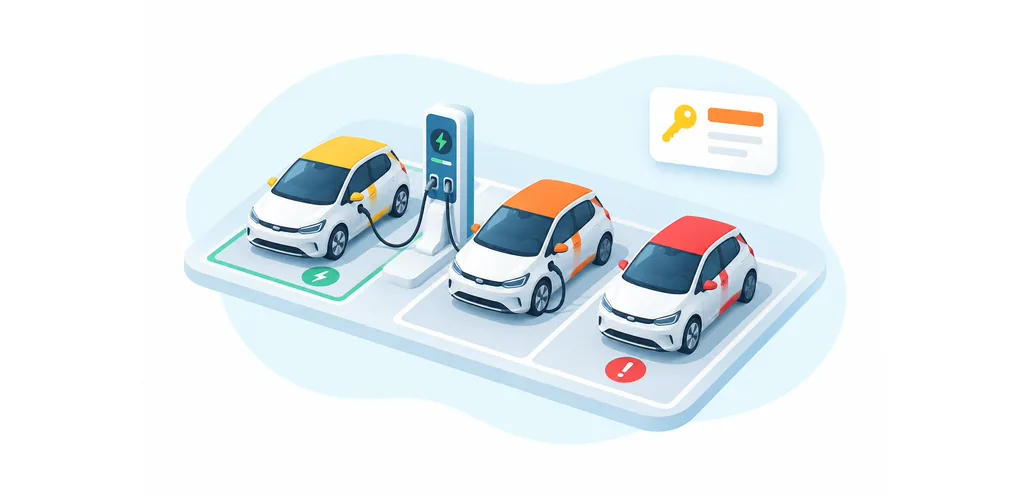


전기차 렌탈 사업은 지키기 어려운 단순한 약속을 내세웁니다. 모든 차량은 충전이 완료되고, 청소가 끝나며, 배정이 이루어지고, 요금이 정확하게 청구되어야 하며, 다음 예약에 대비해 준비가 되어 있어야 합니다.
렌터카 업체의 전기차 충전 관리는 단순히 지점이나 차고에 충전기를 설치하는 것만을 의미하지 않습니다. 이는 빠르게 변화하는 차량 함대 전반에 걸쳐 차량 가동 상태, 충전 비용, 고객 청구, 충전기 가동 시간, 그리고 직원 업무량을 관리하는 것을 의미합니다.
렌탈 업체의 경우, 충전 문제는 차량이 반납될 때 시작됩니다. 다음 고객이 2시간 후에 도착할 수도 있습니다. 배터리 잔량이 12%일 수도 있습니다. 차고지의 전력망 수용 능력이 제한적일 수도 있습니다. 충전 세션은 차량, 지점, 고객 계약 또는 내부 비용 센터에 할당되어야 할 수도 있습니다. 이러한 단계가 수동으로 이루어진다면, 전기차 운영 비용은 금세 증가하고 운영의 일관성도 떨어지게 됩니다.
이 가이드에서는 렌터카 업체가 전기차 충전 운영에서 무엇을 필요로 하는지, 수동 프로세스에서 어떤 문제가 발생하는지, 그리고 다음과 같은 관리형 플랫폼이 어떻게 Tridens EV Charge 렌탈 차량 업체가 충전, 가격 책정, 청구, 로밍 및 고객 경험을 하나의 워크플로우로 통합할 수 있도록 지원합니다.
렌터카 업체를 위한 전기차 충전이란 무엇인가요?
렌터카 업체의 전기차 충전 관리란 렌터카용 전기차 충전을 계획, 운영, 모니터링하고 이를 통해 수익을 창출하는 과정을 말합니다. 여기에는 차고지 충전기, 지점 충전기, 공공 충전소 이용, 운전자 안내, 차량 준비 상태 점검, 직원 업무 흐름, 고객 충전 정책 및 청구 규칙 등이 포함됩니다.
개인 운전자는 대개 차량 한 대와 배터리 한 개만 생각하기 마련입니다. 반면 렌터카 업체는 사정이 다릅니다. 여러 지점, 예약 시간대, 차량 등급, 고객 세분화, 운영 우선순위 등을 고려하여 수백 건에서 수천 건에 이르는 충전 건을 관리해야 하기 때문입니다.
렌탈 용도는 일반 차량 함대 충전과는 다릅니다.
많은 차량 운영 업체는 내일 어떤 운전자가 어떤 차량을 사용할지 미리 알고 있습니다. 하지만 렌터카 업체의 경우 대개 그렇지 않습니다. 차량은 고객, 지점, 공항, 도심 지역, 서비스 구역 사이를 오갑니다. 수요는 계절, 주말, 항공편 도착 시간, 지역 행사 등에 따라 달라집니다. 충전 소프트웨어는 이러한 불확실성을 수용할 수 있어야 합니다.
주요 목표는 단순히 저렴한 충전 비용뿐만이 아닙니다. 바로 차량의 이용 가능성입니다. 다음 고객이 도착했을 때 렌터카 전기차가 여전히 충전 중이라면, 설령 충전 요금이 저렴했다 하더라도 서비스상 문제가 발생합니다.

렌터카 업체에 관리형 충전 모델이 필요한 이유
초기 전기차 대여 프로그램은 간단한 규칙만으로도 운영될 수 있습니다. 직원은 차량이 반납되면 충전하고, 고객은 배터리 반납 정책을 따릅니다. 예외적인 상황은 지점장이 처리합니다. 이용량이 적을 때는 이런 방식이 잘 통합니다.
대규모로 운영할 경우, 누락된 규칙 하나하나가 비용으로 이어집니다. 차량은 각기 다른 충전 상태로 반납됩니다. 일부 충전기는 고장이 나기도 합니다. 일부 차량은 신속한 회수가 필요합니다. 일부 지점은 반납이 집중되는 시간대에 전력 용량이 부족해지기도 합니다. 일부 충전 비용은 렌터카 회사가 부담해야 하는 반면, 다른 비용은 렌터카 계약에 따라 고객에게 전가되어야 합니다.
차량 가동 준비 상태가 운영 지표로 자리 잡게 된다
렌터카 업체는 어떤 전기차(EV)가 사용 가능한지, 어떤 차량이 충전 중인지, 어떤 차량에 주의가 필요한지, 그리고 예약이 예정되어 있어 우선적으로 처리해야 할 차량이 무엇인지 파악해야 합니다. 관리형 충전 플랫폼은 직원이 충전기를 하나씩 일일이 확인해야 하는 번거로움을 없애고, 충전기 상태를 차량 운영 현황과 연동시켜야 합니다.
이 지점에서 충전 관리가 차량 운영의 한 과제로 대두됩니다. 이 시스템은 다음과 같은 실질적인 질문에 대한 해답을 제시해야 합니다. 어떤 차량을 먼저 충전해야 할까요? 사용 가능한 충전기는 어디에 있을까요? 이 차량이 다음 예약 시간 전에 목표 배터리 잔량에 도달할 수 있을까요? 각 충전 세션은 어떤 차량과 위치에 해당하는 것일까요?
충전 비용에는 스프레드시트가 아니라 규정이 필요하다
충전에는 직접적인 에너지 비용과 간접적인 운영 비용이 발생합니다. 렌터카 업체는 지점별 에너지 사용, 공공 충전 비용 보상, 고객 반납 수수료, 직원의 충전 이용 권한, 지점 간 이전 등에 관한 명확한 규정이 필요합니다.
이러한 규칙이 스프레드시트에 담겨 있다면, 재무팀은 지연된 데이터를 받게 되고 지점 팀은 일관성 없는 정책을 적용하게 됩니다. 더 나은 모델은 충전 세션을 가격 책정, 청구서, 보고서 및 고객 대상 약관과 연계합니다.
전기차(EV) 렌탈용 충전 소프트웨어의 핵심 요구 사항
렌터카 업체들은 전기차 충전 소프트웨어를 평가할 때 단순히 충전기 호환성뿐만 아니라 운영상의 필요 사항도 고려해야 합니다. 하드웨어도 중요하지만, 전기차 렌탈 사업이 원활하게 확장될 수 있는지는 하드웨어를 둘러싼 시스템에 달려 있습니다.
| 요구 사항 | 렌탈 차량 대여 업체에게 이것이 중요한 이유 | 확인해야 할 사항 |
|---|---|---|
| 충전기 모니터링 | 지점에서는 예약에 영향을 미치기 전에 충전기 상태, 세션 진행 상황 및 오류 정보를 확인해야 합니다. | 모든 사이트에 걸쳐 충전기 및 세션 현황을 실시간으로 파악할 수 있습니다. |
| 스마트 충전 | 모든 차량이 최대 출력으로 충전할 경우, 피크 충전 시간대에는 차고 수용 능력이 과부하될 수 있습니다. | 동적 부하 분산 및 과금 우선순위. |
| 차량-세션 매핑 | 재무 및 운영 부서는 충전 비용을 차량, 지점, 예약 또는 고객 규칙과 연계해야 합니다. | 차량 함대 및 청구 기록과 연계된 세션 데이터. |
| 가격 및 청구 | 반품 정책, 유휴 수수료, 직원 청구 및 고객 청구 패키지에 대해서는 일관된 수익화 방안이 필요합니다. | 현지 관세, 청구, 결제 및 송장 처리 지원. |
| 로밍 접속 | 운전자는 렌터카 지점 네트워크 외부의 공공 충전소를 이용해야 할 수도 있습니다. | 해당되는 경우 OCPI 또는 OICP를 통한 eRoaming 지원. |
| 고객 경험 | 임차인들은 지점 직원이 매번 설명해 주지 않아도 될 만큼 명확한 안내와 간편한 이용 방법이 필요합니다. | 화이트라벨 앱, 알림 및 지원 워크플로우. |

하드웨어에 구애받지 않는 충전기 지원
렌터카 업체들은 대개 공항, 도심 지점, 가맹점, 정비소 등 다양한 장소에서 사업을 운영합니다. 단일 하드웨어 공급업체의 제품이 모든 장소에 적합하지 않을 수 있습니다. 하드웨어에 구애받지 않는 소프트웨어를 사용하면 운영자는 위치, 전력 수준, 비용, 가용성 등을 기준으로 충전기를 더 자유롭게 선택할 수 있습니다.
Tridens EV Charge OCPP 규격을 준수하는 충전 인프라를 지원하므로, 렌탈 사업자는 특정 하드웨어 브랜드에 얽매이지 않고 다양한 충전기로 구성된 네트워크를 관리할 수 있습니다.
동적 부하 분산
렌터카 반납소는 충전 피크에 취약합니다. 많은 차량이 같은 저녁 시간대나 공항 도착 시간대에 반납되기 때문입니다. 모든 충전기가 동시에 최대 전력을 끌어쓰게 되면, 해당 시설이 전력망 용량 한도에 도달하거나 불필요한 피크 수요 비용을 발생시킬 수 있습니다.
스마트 충전 그리고 동적 로드 밸런싱 사이트 용량과 운영 우선순위에 따라 이용 가능한 전력을 차량들 간에 분배하는 데 도움을 줍니다. 목표는 간단합니다. 사이트에 과부하가 걸리지 않도록 적절한 차량을 먼저 충전하는 것입니다.
전문가 팁:
배터리 잔량뿐만 아니라 예약 마감 시간을 기준으로 충전 우선순위를 설정하여, 다음에 대여할 차량이 가장 먼저 준비되도록 하세요.
Native billing and tariff control
Billing is where many EV rental charging projects become messy. A rental operator may need different rules for depot charging, customer return fees, public charging packages, corporate accounts, employee use, and partner locations.
This is the strongest fit for Tridens. Tridens EV Charge is built on billing architecture, so charging monetization is native rather than bolted on. Rental companies can connect tariffs, session data, payments, and customer billing without building a separate revenue stack around the charging platform.
How a rental EV charging workflow should work
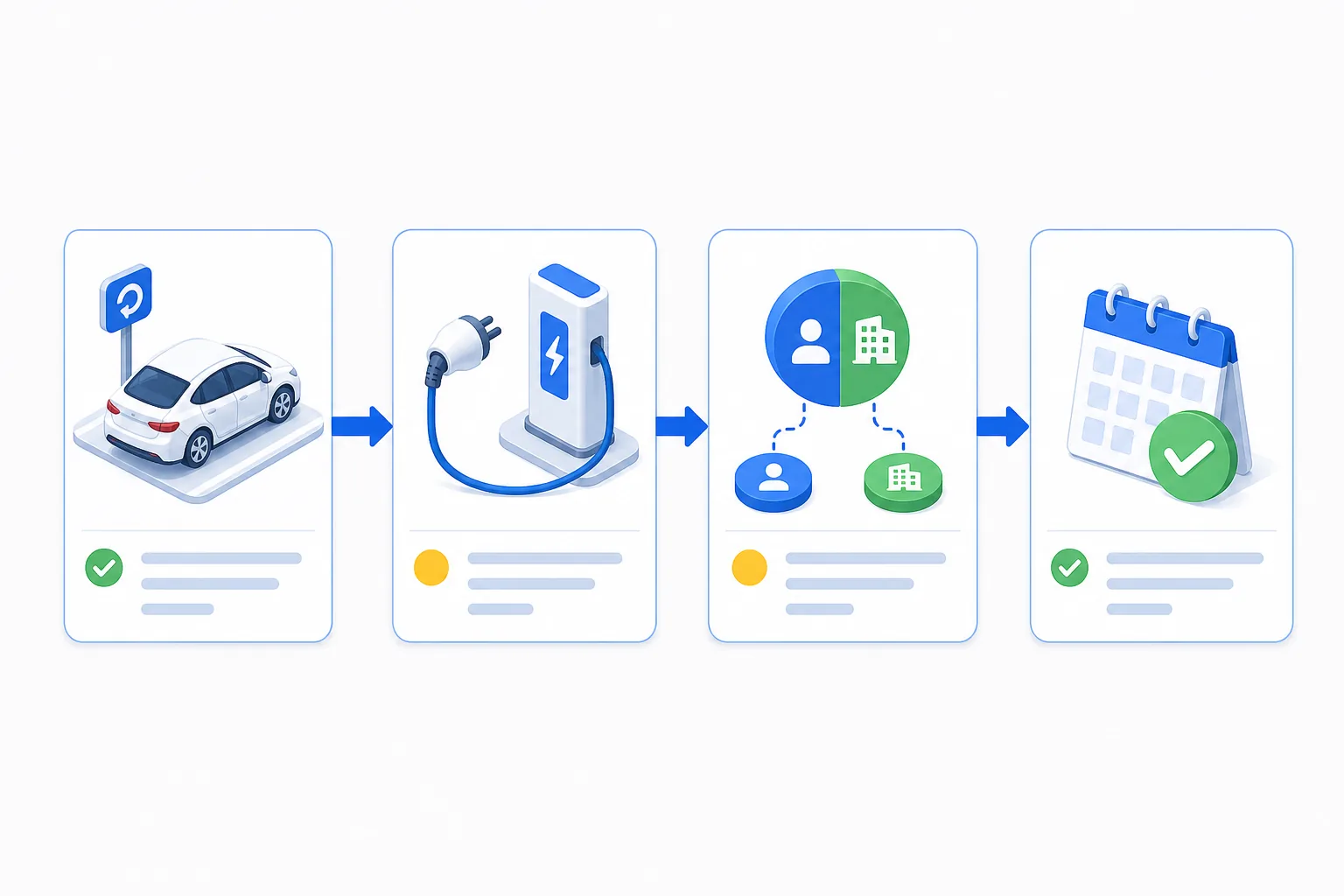
A good rental EV charging workflow starts before the vehicle reaches the charger. The system should already know the vehicle, its expected return location, the next reservation window, the target battery level, and the site capacity available for charging.
1. Vehicle return and battery check
When the EV returns, staff confirm the state of charge and assign the vehicle to the charging workflow. This step should be fast. The branch should not rely on manual notes that finance and operations never see.
2. Charging priority and charger assignment
The platform should decide which vehicles need priority based on the next booking, current battery level, charger availability, and site power limits. A vehicle with a morning booking may need priority over one that is parked for three days.
3. Session monitoring and exception handling
Rental branches need alerts when a charger is offline, a cable is disconnected, a session stops, or a vehicle will not reach the target level in time. This reduces last-minute surprises at the rental counter.
4. Cost allocation and customer billing
Each charging session should be connected to the right billing or reporting rule. Some costs stay internal. Some apply to a rental agreement. Some belong to a corporate account. Some may be handled through a charging package or return policy.
Common EV rental charging problems
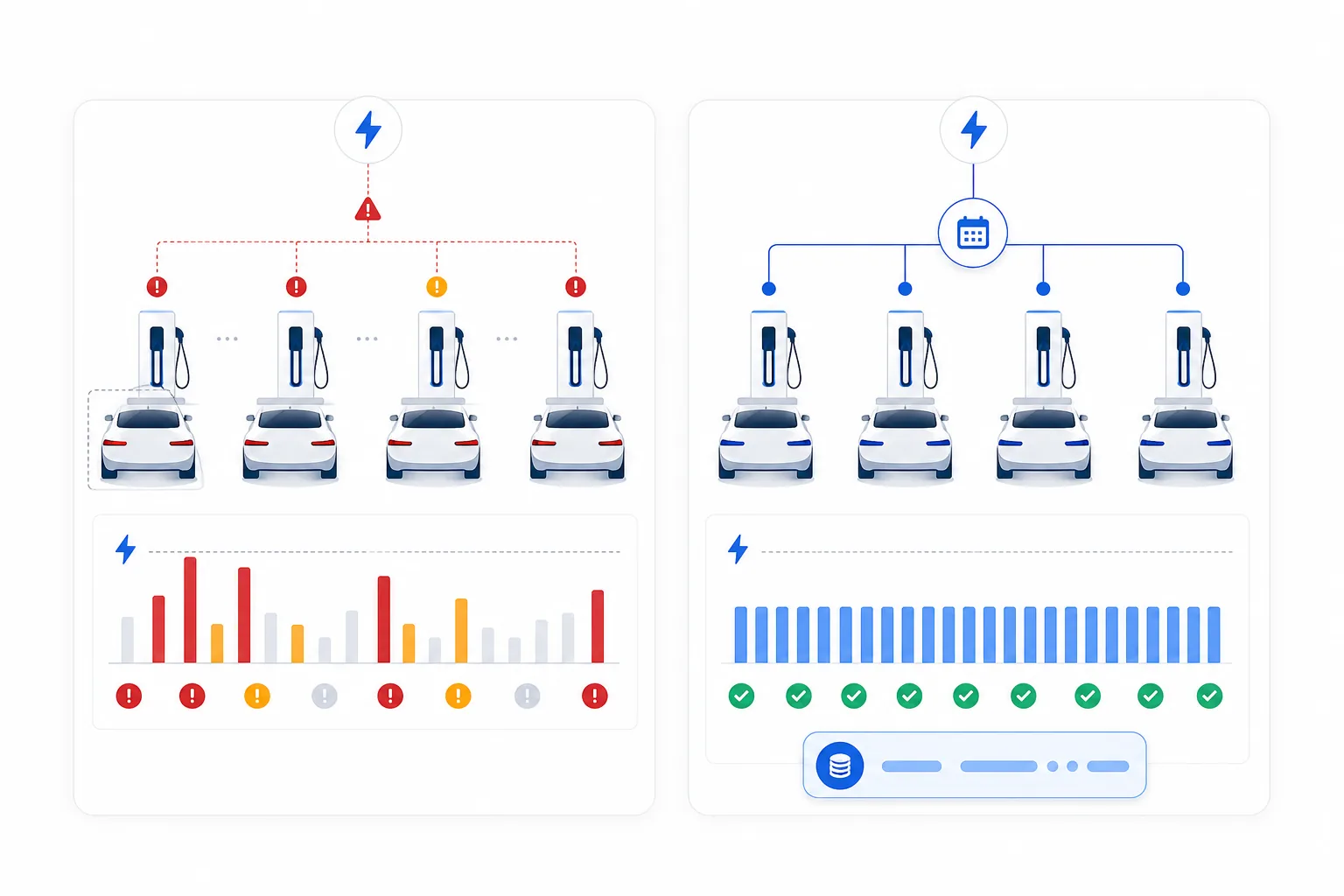
Most EV rental charging problems are not caused by the vehicle. They are caused by gaps between charger operations, fleet planning, customer terms, and billing. These gaps become visible when the rental volume grows.
Unclear return battery policies
Customers need simple charging rules. If the return policy is unclear, branch staff end up explaining exceptions, customers dispute fees, and billing teams need manual corrections. Charging terms should be visible, consistent, and connected to the billing system.
Depot capacity bottlenecks
Adding more chargers does not automatically solve site capacity. Some locations need better power distribution, priority rules, and charging schedules before they need more hardware. Load balancing helps operators use existing capacity more intelligently.
Disconnected public charging data
Rental customers may charge away from the branch. If public charging access, roaming, reimbursements, or packages are disconnected from the rental account, the experience becomes harder to support. CPO and EMSP roles matter because rental operators may need to think like both a fleet operator and a charging service provider.
Tridens EV Charge가 적합한 경우
Tridens EV Charge helps rental and fleet operators manage charging operations across chargers, locations, drivers, customers, and billing workflows. It is a strong fit when the rental company wants charging to be part of the operating model, not a separate tool managed outside the revenue process.
The platform is hardware-agnostic, supports OCPP-based charger management, and includes eRoaming through OCPI and OICP. It also supports a white-label mobile app, AI-assisted operations, dynamic load balancing, personalized pricing, and built-in billing.
That billing foundation is important for car rental companies. Charging is not only a facility cost. It can affect packages, penalties, corporate accounts, partner settlement, internal reporting, and customer invoices. When billing is native to the platform, the operator can build charging policies that match the rental business instead of forcing finance teams to reconcile charging data later.
시작할 준비가 되셨나요?
See how Tridens EV Charge connects rental fleet charging, pricing, billing, roaming, and customer experience.

FAQ about EV charging for car rental companies
What does EV charging for car rental companies include?
It includes depot and branch charging, charger monitoring, vehicle readiness, public charging access, customer charging policies, cost allocation, pricing, billing, and support workflows.
Do rental EVs need to be returned fully charged?
That depends on the rental company’s policy. Operators should define clear return battery rules and connect any fees, packages, or exceptions to the billing process.
Why is managed charging important for rental fleets?
Managed charging helps branches prioritize vehicles, avoid charger downtime, control depot power limits, reduce manual work, and keep EVs ready for the next booking.
What software features matter most for EV rental charging?
Important features include charger monitoring, dynamic load balancing, hardware-agnostic OCPP support, pricing and billing, eRoaming support, customer app options, and operational alerts.
How does Tridens EV Charge support rental fleet charging?
Tridens EV Charge connects charger operations, smart charging, roaming, pricing, billing, payments, and customer workflows in one EV charging management platform.
