



배경
Israel Electric Corporation (IEC) is an electric utility that runs a private electric fleet used only for its own business needs. It needed one system to manage its vehicles, charging infrastructure and internal driver workflows.
Its previous EV charging platform, Driivz, lacked flexibility, visibility and automation. That made it hard to deliver reliable charging for the fleet while staying focused on core utility operations.
도전 과제
Driivz could not support the complexity of IEC’s fleet operations:
- Fragmented fleet data: RFID cards and vehicle data sat in separate tools, which slowed validation, routing, reporting and driver support.
- Rigid driver workflows: the previous platform struggled to support custom workflows for drivers.
- Limited alerting and monitoring: alerts and monitoring did not reach the level operations required, and several key capabilities were missing.
- Reliance on specialists: daily work depended on highly specialized staff, so the team wanted high automation and AI features.
솔루션
IEC successfully migrated from Driivz to Tridens EV Charge, set up for private fleet needs. The migration consolidated data, simplified configuration and removed limits that had slowed operational growth. Fleet managers now oversee the whole charging setup in one environment, including private fleet activity across multiple regions.
Modernized Fleet Operations
Processes were redesigned around real usage patterns, which improved how drivers, vehicles and chargers interact. The platform supports the specific needs of fleet dispatchers, supervisors and field teams, with fewer misunderstandings and unnecessary steps.
Advanced Alerting, Monitoring and AI
Granular controls let teams track charger performance, detect failures and respond faster to critical errors, outages or unusual behavior. Custom rules mirror internal processes, so every alert is actionable. AI automates routine diagnostics, data checks and operational recommendations, and AI-generated reports help managers decide faster with less need for highly specialized staff.
Unified Fleet Management
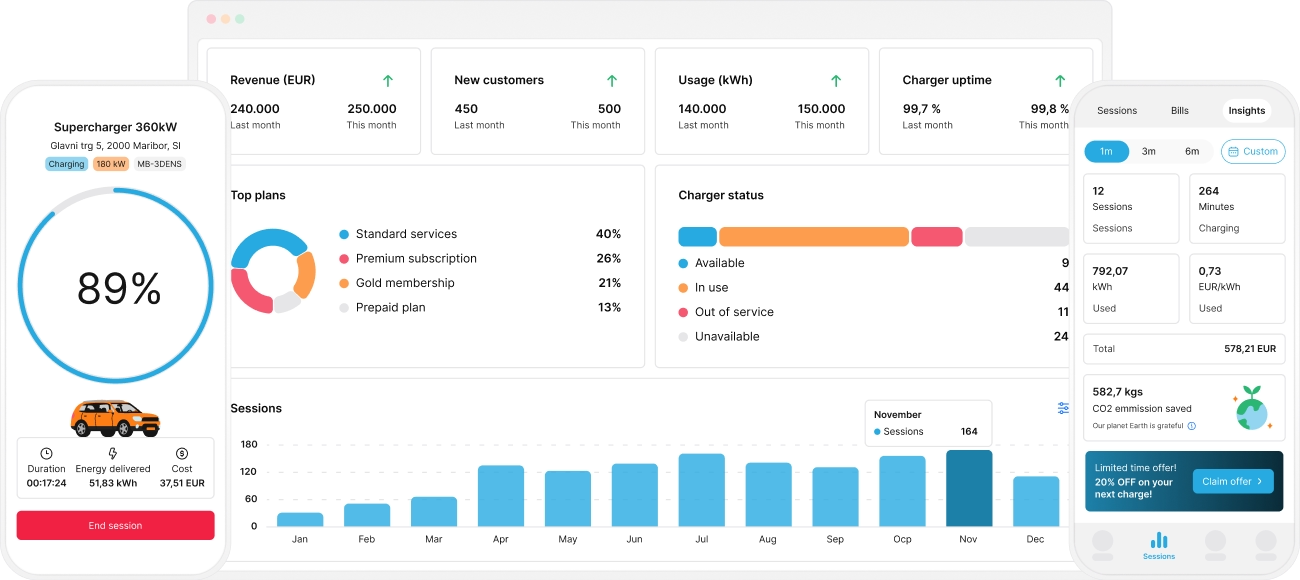
RFID cards, vehicles, pairings, driver preferences such as favorite vehicles, and authorization rules now sit in one management hub. Managers see real-time status, usage history, vehicle-RFID relationships, session insights, charger performance trends and automated reports.
Purpose-Built Driver App
A custom mobile app, built around how the fleet is actually used, lets drivers manage charging sessions, access vehicles and view authorization details without relying on support teams.
혜택
- Faster fault response: granular alerts let teams detect failures and respond faster to errors and outages.
- Fewer service calls: drivers manage sessions and view authorization details in their own mobile app.
- Growth without new hires: AI automates routine diagnostics and reports, so operations scale without extra staff.
결과
IEC now runs smoother fleet operations, with a better driver experience and better network reliability. Teams have real-time visibility, respond faster and handle less manual work. Service calls dropped because drivers handle routine tasks in their own app. AI assistance lets operations grow without additional hiring, and the new setup gives the utility a foundation to scale its internal charging operations.